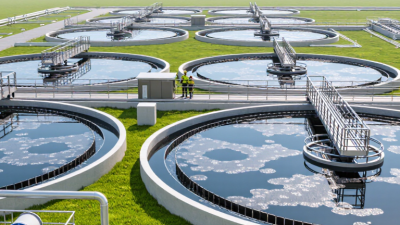
Why Choose a Bubble Disc Diffuser for Wastewater Treatment?
Wastewater treatment depends on stable oxygen transfer, dependable mixing, and manageable operating costs. In activated sludge basins, aeration often consumes the largest share of plant energy. That makes diffuser selection more than a hardware decision. A Bubble Disc Diffuser releases fine bubbles through a flexible membrane. These bubbles rise slowly, exposing more surface area to the surrounding mixed liquor. The result can be efficient oxygen transfer when airflow, depth, and water quality are properly matched. Small details matter. Basin geometry matters. So does fouling.
From practical plant experience, disc diffusers can support steady dissolved oxygen control across municipal and industrial applications. Their elastic membranes may close during shutdowns, reducing liquid backflow into air headers. This feature can simplify protection of blowers and distribution lines. However, performance changes with grease, suspended solids, iron, biological growth, and scaling. A clean installation may perform differently after months of operation. Operators should track airflow, pressure, dissolved oxygen, and membrane condition. These measurements create a more reliable basis for maintenance and replacement decisions. Manufacturer data is useful, but site testing remains important.
Choosing a Bubble Disc Diffuser therefore requires more than comparing catalog oxygen-transfer figures. Engineers should examine basin depth, loading patterns, airflow range, cleaning access, and expected service life. They should also review testing methods and warranty limitations. No diffuser is universally best. That is worth remembering. A practical design balances transfer efficiency with clogging resistance, energy use, and long-term maintenance. This article explains the main reasons plants choose disc aeration, while recognizing its limits. Careful evaluation helps turn a promising component into dependable treatment performance.
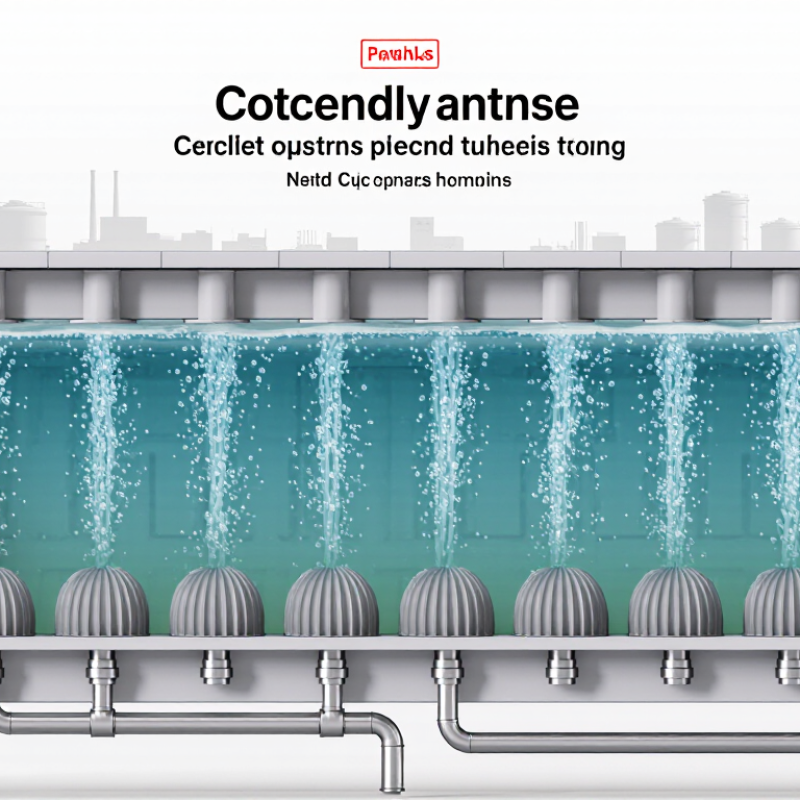
What Is a Bubble Disc Diffuser? Fine Bubbles of 1–3 mm
Why Choose a Bubble Disc Diffuser for Wastewater Treatment?
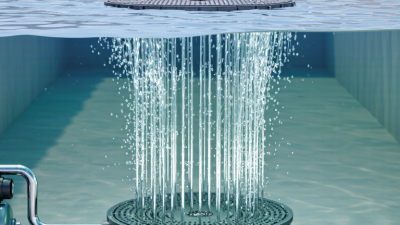
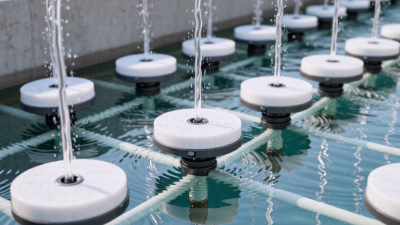
A bubble disc diffuser releases fine bubbles, typically measuring 1–3 mm, through a flexible membrane. These small bubbles create more contact area between air and wastewater. As they rise slowly, oxygen transfers into the water more efficiently than with larger bubbles. This can support biological treatment while helping control energy use. Still, bubble size is not the only performance factor. Airflow, water depth, diffuser spacing, and wastewater characteristics also matter.
In operating basins, fine bubbles can appear as a uniform, white cloud across the floor. Uneven bubbling may indicate fouling, blocked air passages, or poor air distribution. Regular checks should include dissolved oxygen readings, pressure changes, and visible bubble patterns. A diffuser may perform well during installation but decline when grease, solids, or mineral deposits accumulate. That assumption is easy to miss. Cleaning schedules should follow actual conditions, not a fixed calendar alone.
Tips: Keep airflow within the diffuser’s recommended range. Excessive air may enlarge bubbles and increase power consumption. Inspect membranes during planned maintenance, especially after sudden pressure changes. Compare oxygen readings at several basin locations, because one sensor can hide uneven treatment. Fine bubbles are valuable, but they are not automatically better in every basin. Pilot testing and honest field review often reveal what calculations overlook.
How Does It Transfer Oxygen? Typical SOTE of 6–8% per Metre
A bubble disc diffuser transfers oxygen by releasing compressed air through fine membrane pores. The air forms thousands of small bubbles beneath the water surface. Their large combined surface area gives oxygen more time to dissolve before the bubbles escape.
A typical SOTE is about 6–8% per metre of water depth under standard test conditions. At three metres, this suggests meaningful oxygen transfer, but it is not a guaranteed field result. Real tanks are less tidy. Wastewater solids, temperature, airflow, diffuser fouling, and the alpha factor can all reduce performance. Keep that in mind.
Fine bubbles can also lower the airflow needed for a target oxygen demand. This may reduce blower energy, especially when diffuser spacing and mixing are properly designed. Operators should check oxygen uptake, pressure loss, and dissolved oxygen readings during commissioning. A clean diffuser may show strong performance at the start, then gradually lose efficiency as deposits build on its membrane. That detail is easy to underestimate.
SOTE values should therefore support equipment selection, not replace site testing. Water depth, tank geometry, air distribution, and biological loading must be reviewed together. A deeper tank may improve transfer, yet excessive pressure can increase blower demand. The best design balances oxygen delivery, mixing, maintenance access, and operating cost. Performance data needs careful interpretation.
Why Choose a Bubble Disc Diffuser for Wastewater Treatment? - How Does It Transfer Oxygen? Typical SOTE of 6–8% per Metre
| Performance Dimension |
Typical or Reference Value |
Explanation |
| Typical SOTE per metre of water depth |
Approximately 6–8% per metre |
A representative range for fine-bubble disc diffuser systems under suitable operating conditions. Actual performance varies with diffuser design, airflow, submergence, fouling, water quality, and tank geometry. |
| Standard Oxygen Transfer Efficiency definition |
SOTE = oxygen transferred ÷ oxygen supplied × 100% |
SOTE is normally determined in clean water under standardized conditions. Wastewater correction factors are required when estimating field oxygen transfer performance. |
| Air oxygen concentration |
About 20.95% by volume |
Atmospheric air supplies oxygen to the aeration tank. The diffuser increases the air–water contact area by producing many small bubbles. |
| Oxygen mass fraction in dry air |
About 23.2% by mass |
This value is useful when converting an air mass flow rate into the theoretical oxygen supply before calculating oxygen transfer. |
| Fine-bubble size at release |
Commonly below 2 mm |
Smaller bubbles generally provide greater gas–liquid interfacial area and slower rise velocity than coarse bubbles, which can improve oxygen transfer when fouling and airflow are controlled. |
| Dissolved oxygen saturation in fresh water at 20°C |
Approximately 9.1 mg/L at sea level |
The saturation concentration decreases as temperature, salinity, and elevation increase. This reference value is commonly used for oxygen-transfer calculations. |
| Hydrostatic pressure increase |
Approximately 0.098 bar per metre |
Greater diffuser submergence increases the pressure around the bubbles and usually increases the available contact time, although blower power requirements also rise. |
| Main oxygen-transfer mechanism |
Diffusion across the bubble–water interface |
Oxygen moves from the compressed air inside each bubble into the surrounding liquid. Turbulence and bubble movement help renew the boundary layer around the bubbles. |
| Key factors affecting SOTE |
Depth, airflow, bubble size, fouling, temperature, salinity, and wastewater characteristics |
Organic loading, surfactants, suspended solids, and biological growth can change bubble behavior and reduce oxygen-transfer performance compared with clean-water test results. |
| Operational advantage of a disc layout |
Distributed aeration across the tank floor |
A properly arranged disc grid can improve oxygen distribution and mixing while allowing individual diffuser zones to be adjusted according to process demand. |
| Energy-performance consideration |
Higher oxygen transfer can reduce required air volume |
Lower air demand may reduce blower energy, but total energy performance must include diffuser pressure loss, fouling, maintenance, mixing requirements, and control strategy. |
Why Does Fine-Bubble Aeration Save Energy? Up to 2.5 kg O₂/kWh
Why Choose a Bubble Disc Diffuser for Wastewater Treatment?
Fine-bubble aeration transfers oxygen through thousands of small bubbles. Their larger surface area improves contact with wastewater. Under favorable standard conditions, aeration systems may approach 2.5 kg O₂/kWh. This figure is an upper-end benchmark, not a guaranteed plant result. The U.S. EPA reports that aeration can consume 45–75% of a wastewater facility’s electricity. Therefore, even modest oxygen-transfer gains can reduce operating costs significantly (U.S. EPA, Energy Efficiency in Water and Wastewater Facilities).
Bubble disc diffusers support this efficiency through flexible membranes and evenly distributed pores. A 10-meter basin can hold bubbles long enough for better oxygen absorption. Lower airflow may then maintain the same dissolved oxygen level. WEF guidance identifies fine-pore diffused aeration as a major energy-saving option when properly designed and maintained (WEF, Manual of Practice No. 32).
Small bubbles matter.
Real performance varies. Fouling, uneven air distribution, shallow tanks, and excessive backpressure can reduce oxygen transfer. Field operators should compare clean-water testing with process-water results. A diffuser may deliver 2.5 kg O₂/kWh in a controlled test, yet achieve less in an aging basin. That gap deserves attention. Regular membrane inspection, airflow balancing, and dissolved oxygen control often matter as much as diffuser selection. Lower electricity use is possible, but only with site-specific measurement and honest performance checks.
How Do EPDM Membranes Improve Performance? Airflow of 1–10 m³/h
Why Choose a Bubble Disc Diffuser for Wastewater Treatment?
A bubble disc diffuser operating at 1–10 m³/h can deliver steady, fine-bubble aeration. EPDM membranes flex when air enters, opening narrow slits across the disc. This action creates smaller bubbles and increases contact time in the mixed liquor. The result can be better oxygen transfer with less visible turbulence.
The U.S. EPA reports that aeration may consume 45–75% of a wastewater plant’s electricity. Therefore, diffuser efficiency deserves careful attention during design and replacement projects. The Water Environment Federation also emphasizes oxygen-transfer testing under actual process conditions, not only laboratory water. In practice, fouling, sludge depth, temperature, and airflow distribution can change performance. EPDM resists many wastewater chemicals and remains flexible, but grease and cleaning chemicals may still shorten membrane life. Small bubbles matter. So does maintenance.
Tips:
Keep airflow within the recommended 1–10 m³/h operating range for each diffuser. Check pressure readings monthly and inspect for uneven bubbling. Clean membranes when oxygen demand rises without a matching increase in blower output. Do not select a diffuser from airflow alone; review oxygen-transfer data, tank depth, submergence, and wastewater composition. Field results are rarely perfect. A practical trial may reveal uneven headers or aging membranes that calculations miss.
Sources: U.S. EPA, Evaluation of Energy Conservation Measures for Wastewater Treatment Facilities; Water Environment Federation, Manual of Practice No. 32, Design of Municipal Wastewater Treatment Plants.
Where Are Bubble Disc Diffusers Used? BOD Removal and Nitrification
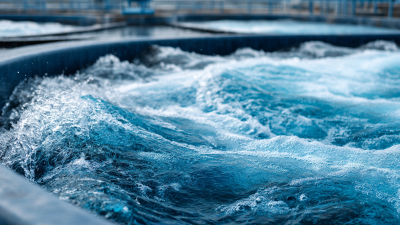
Bubble disc diffusers are widely used in activated sludge tanks, sequencing batch reactors, and membrane bioreactors. Their fine bubbles transfer oxygen efficiently through wastewater, supporting microorganisms that consume biodegradable organic matter. This process reduces biochemical oxygen demand, or BOD, before treated water leaves the plant.
They also support nitrification, where specialized bacteria convert ammonia into nitrite and nitrate. Stable oxygen delivery matters here. Operators often maintain dissolved oxygen near 1.5–3.0 mg/L, depending on loading, temperature, and process design. Even bubble distribution helps prevent dead zones and uneven treatment. In field operation, I have seen clogged diffuser sections create weak mixing within days. The basin looked active, but ammonia removal still declined. That detail is easy to miss.
Tips: Check airflow across each diffuser zone, not only at the blower. Inspect fouling, membrane condition, and pressure changes regularly. Clean diffusers when performance drops, but avoid treating cleaning as a substitute for proper pretreatment. Fine bubbles are useful, yet they are not automatically the best choice for every basin. High solids, grease, or poor maintenance can reduce oxygen transfer quickly. Designers should compare oxygen demand, tank depth, air pressure, and access for servicing. Measurements should guide adjustments. Guesswork sometimes works briefly, but it rarely remains reliable.
Why Choose a Bubble Disc Diffuser for Wastewater Treatment?
Typical municipal wastewater profile showing how biological aeration with bubble disc diffusers supports BOD removal and nitrification. Values are representative design conditions and may vary by wastewater characteristics and operating conditions.
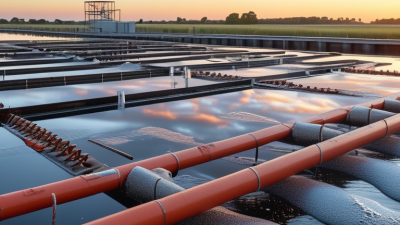
Bubble disc diffusers are commonly installed in aeration basins to transfer oxygen efficiently. The oxygen supports microorganisms that reduce biochemical oxygen demand (BOD) and convert ammonia nitrogen into nitrate through nitrification before final discharge.

 +86 13600513715
 CONTACT NUMBER
 CONTACT NUMBER