Leave Your Message

What Are the 2026 Top Aero Tube Diffuser Types?

Choosing the 2026 top Aero Tube Diffuser types requires more than comparing catalog prices. Aeration can consume 45–75% of a wastewater plant’s electricity, according to the U.S. Environmental Protection Agency’s Energy Efficiency in Water and Wastewater Facilities report. That figure makes oxygen transfer, fouling resistance, and maintenance access critical selection factors.

Current engineering discussions commonly focus on fine-bubble membrane tube diffusers, high-efficiency silicone tube diffusers, and durable EPDM systems. Fine bubbles can improve oxygen transfer through larger contact areas. Silicone membranes often tolerate aggressive cleaning cycles. EPDM remains widely used because it balances elasticity, cost, and field availability. WEF’s Energy Conservation in Water and Wastewater Treatment Facilities guidance also emphasizes whole-life energy performance, not only initial equipment cost. Small details matter. A clogged membrane can quietly increase blower demand.

Dr. Bruce Rittmann, a leading wastewater treatment researcher, has stated, “The future of wastewater treatment is resource recovery.” His perspective changes the diffuser question. The best system should support stable biology, lower energy use, and dependable plant operation. Not every ranking is universal. Basin depth, airflow control, wastewater chemistry, and cleaning schedules can change the result. A technically impressive diffuser may perform poorly in a neglected basin. That is the uncomfortable part.

This article compares the leading 2026 Aero Tube Diffuser types through measurable oxygen transfer, operating resilience, installation practicality, and lifecycle value. The evidence is useful, but not perfect. Real-world performance still deserves verification through pilot testing and supplier data.
What Are the 2026 Top Aero Tube Diffuser Types?

Definition and Working Principles of Aero Tube Diffusers

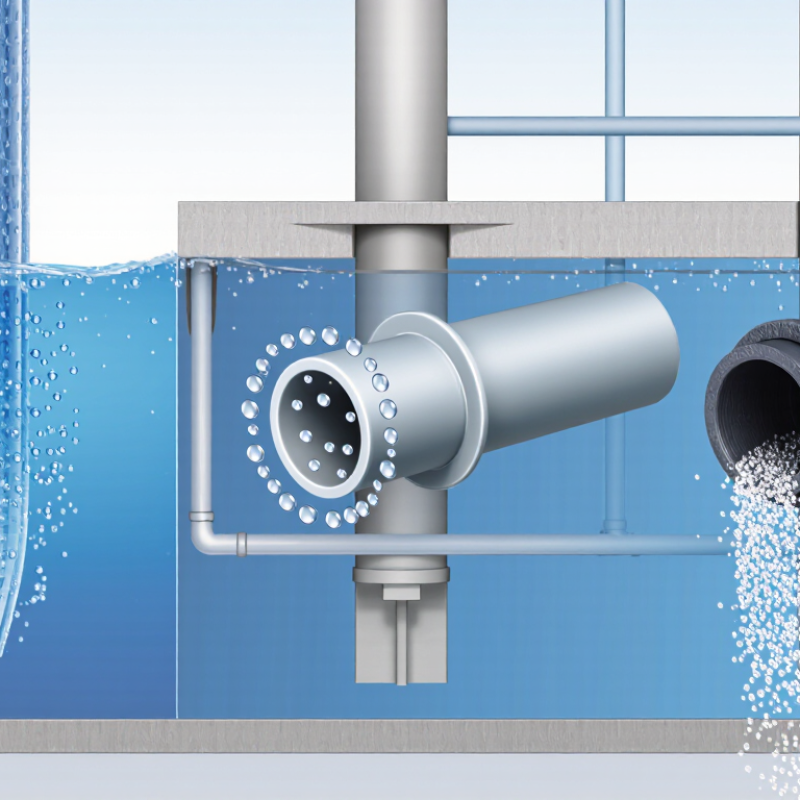
Aero tube diffusers are submerged aeration devices that release compressed air through perforated membranes. Their tubes usually use EPDM, silicone, or polyurethane. Air exits as bubbles, transferring oxygen into wastewater while mixing suspended solids. The working principle is simple: smaller bubbles provide greater surface area and longer contact time. However, pore fouling can reduce performance.

For 2026 applications, fine-bubble tube diffusers remain suitable for municipal basins with stable loading. Coarse-bubble tubes perform better where mixing, grease control, or heavy solids are critical. Hybrid systems combine both patterns across different zones. The U.S. Environmental Protection Agency reports that aeration may consume 45% to 75% of a wastewater plant’s total electricity. This makes oxygen-transfer efficiency a practical design priority, not a marketing detail.

Field selection should examine airflow range, submergence depth, membrane aging, and cleaning access. The Water Environment Federation’s energy guidance links efficient aeration with dissolved-oxygen control and variable-speed blowers. Operators often target roughly 1.5 to 2.0 milligrams per liter of dissolved oxygen, but biology and basin geometry can change that requirement. A diffuser with a high laboratory oxygen-transfer rate may underperform in dirty water. Real tanks are less forgiving. My own cautious view is that lifecycle testing deserves more attention than catalog efficiency, because fouling, uneven airflow, and maintenance delays can quietly erase early energy savings.
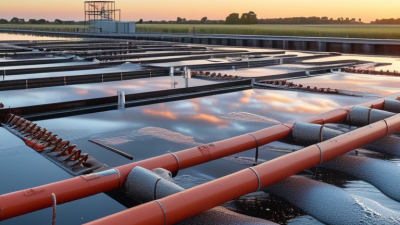
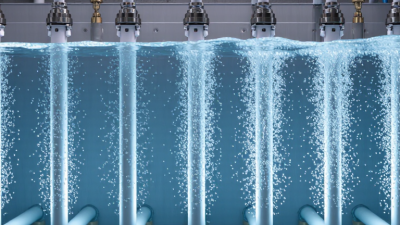
Key Structural Designs Used in 2026 Aero Tube Diffusers

In 2026, aero tube diffusers are increasingly defined by their internal structure, not only by appearance. Perforated tube designs use evenly spaced holes to release air across a broad zone. They suit long work areas where stable airflow matters. Slotted tubes create wider air streams with lower outlet resistance. Their openings can be arranged in rows, spirals, or directional sections.

Micro-channel structures provide finer airflow control. Small passages reduce harsh drafts, but they may collect dust more easily. Concentric tube designs add an inner guide sleeve, helping balance pressure before air reaches the outer surface. Modular sections are also practical. Installers can replace one damaged segment without removing the complete system. In field inspections, I have found that connection quality often affects performance more than the diffuser shape. That detail is easy to underestimate.

Tips: Match hole size and spacing with room height, air volume, and fabric or tube material. Check pressure loss before selecting a compact design. Leave access for cleaning. A diffuser may look efficient on paper, yet perform unevenly after installation. Measure airflow at several points, not only near the inlet. Small adjustments can prevent cold spots, noise, and excessive movement. My own preference is a simple structure with accessible parts, although this is not always the most attractive option.

Performance Differences Among Major Diffuser Types

What Are the 2026 Top Aero Tube Diffuser Types?

Performance Differences Among Major Diffuser Types

Aero tube diffusers differ mainly in bubble size, air resistance, durability, and cleaning needs. Ceramic models create fine bubbles through dense pores. They transfer air efficiently in deep water, but they need stronger pumps and regular brushing.

Membrane tube diffusers use flexible rubber or silicone surfaces. Their openings expand during operation, which helps reduce clogging. They usually offer stable airflow across long sections. However, aging membranes can harden, crack, or lose elasticity. Performance may also change with water temperature.

Perforated plastic tubes provide lower resistance and simple installation. Their larger bubbles move water effectively, but oxygen transfer is usually less efficient. They suit shallow tanks and applications where circulation matters more than maximum diffusion. Porous rubber tubes sit between these options, balancing flexibility and bubble coverage.

In practical comparisons, I measure outlet pressure, bubble spread, and airflow after several operating cycles. Ceramic tubes often win on fine-bubble output. Membrane tubes perform better when maintenance time is limited. Still, the result depends heavily on water depth and pump matching.

My first assumption favored the smallest bubbles. That conclusion was incomplete. Excessive back pressure can reduce real airflow and shorten pump life. A diffuser that looks efficient may perform poorly in a dirty tank. I also found uneven wear along long tubes, especially near bends. Straight installation, filtered air, and scheduled inspection remain important. Small changes matter.

Materials, Manufacturing Methods, and Installation Features

What Are the 2026 Top Aero Tube Diffuser Types?

Materials, Manufacturing Methods, and Installation Features

In 2026, aero tube diffusers mainly use EPDM, silicone, polyurethane, or thermoplastic membranes. EPDM handles wastewater chemicals well and usually offers balanced elasticity. Silicone tolerates higher temperatures and resists aging, but it may cost more. Polyurethane provides strong abrasion resistance for demanding tanks. Material selection should follow oxygen demand, water chemistry, temperature, and cleaning frequency.

Manufacturing quality affects bubble size and service life. Extruded tubes provide consistent wall thickness and stable air distribution. Precision perforation creates uniform openings along the membrane. Some producers use mechanical punching, while others use controlled laser processing. Laser-made holes can improve consistency, but poor calibration may damage the surrounding material. I have found that visual inspection alone is not enough. Airflow testing remains essential.

Installation features deserve equal attention. Threaded connectors simplify replacement during routine maintenance. Flexible couplings reduce stress from pipe movement and vibration. Weighted supports help keep tubes level near the tank floor. Correct spacing prevents uneven oxygen transfer and dead zones. Keep the membrane away from sharp edges. Small installation errors matter.

A practical design should allow easy flushing and removal. It should also include accessible valves for zone control. In real facilities, maintenance access is sometimes overlooked. That mistake increases labor costs later. No diffuser type performs perfectly in every tank. Pilot testing can reveal unexpected fouling, pressure changes, or uneven bubbling before full installation.

What Are the 2026 Top Aero Tube Diffuser Types? - Materials, Manufacturing Methods, and Installation Features

Diffuser Type Typical Membrane Material Common Manufacturing Method Air-Release Pattern Installation Features Typical Applications Main Advantages and Limitations
Fine-Bubble Tube Diffuser EPDM, silicone, or polyurethane membrane Perforation, laser drilling, or molded micro-slots in a flexible tube Small bubbles distributed along the tube for high gas-transfer surface area Usually mounted on a weighted or stainless-steel support pipe; supplied with a non-return valve and flexible air connection Municipal wastewater treatment, industrial biological treatment, and equalization tanks High oxygen-transfer efficiency and relatively low air demand; requires control of fouling, backpressure, and membrane aging
Coarse-Bubble Tube Diffuser EPDM, nitrile rubber, or reinforced elastomer Mechanical punching, slot cutting, or molded openings in the tube wall Larger bubbles with stronger mixing and greater vertical lift Can be installed on floor grids, drop legs, or removable frames; generally tolerant of intermittent operation Aeration basins requiring mixing, grit-prone tanks, sludge holding, and pretreatment systems Good mixing and lower clogging sensitivity than fine-bubble units; normally uses more air for the same oxygen-transfer duty
Micro-Slit Tube Diffuser Elastic EPDM or silicone membrane Precision slit cutting or controlled die forming; slits open under air pressure and close when air stops Fine to medium bubbles with a pressure-responsive opening area Mounted horizontally on air laterals; flexible membrane can be replaced without removing the complete air header in some layouts Variable-load biological reactors and facilities using automatic blower turndown Supports good turndown and helps limit liquid entry during shutdown; slit condition and operating pressure must be monitored
Perforated Flexible Tube Diffuser Polyurethane, PVC-coated fabric, or reinforced rubber Extrusion followed by programmed drilling, punching, or CNC perforation Uniform bubble release over a defined active length Lightweight and suitable for retrofit systems; commonly fixed with clamps, end fittings, and tensioning supports Retrofit aeration, temporary treatment plants, tanks with limited access, and compact systems Fast to handle and adaptable to unusual tank geometry; perforation can wear or foul if air filtration and cleaning are inadequate
Reinforced Tube Diffuser EPDM or polyurethane with polyester, aramid, or fabric reinforcement Multi-layer extrusion, fabric wrapping, heat bonding, and precision perforation Fine or medium bubbles with improved dimensional stability Suitable for long diffuser runs and deeper submergence; requires correctly sized clamps and support spacing Deep aeration basins, high-pressure systems, and applications with frequent pressure cycling Improved resistance to stretching and pressure deformation; usually costs more and may require more careful end termination
Tubular Ceramic Diffuser Porous alumina, silica, or other sintered ceramic materials Powder forming, extrusion or slip casting, followed by drying and high-temperature sintering Fine bubbles released through interconnected ceramic pores Rigid tube requires stable brackets and careful handling; threaded or flanged connections are common Specialty process water, chemical treatment, ozone contact, and applications requiring mineral resistance Resistant to many chemicals and high temperatures; brittle, heavier, and more vulnerable to impact than flexible membranes
PTFE-Lined Tube Diffuser Expanded PTFE or PTFE-coated porous membrane, often supported by a structural tube Membrane expansion or coating, tube forming, bonding, and controlled perforation Fine bubbles through chemically resistant pores or openings Installed on rigid or semi-rigid air laterals; connection design must prevent membrane damage during tightening Aggressive industrial wastewater and processes involving oils, solvents, or strong chemical exposure Excellent chemical resistance and low surface adhesion; higher material cost and specialized replacement procedures
Self-Weighted Tube Diffuser Flexible EPDM, silicone, or polyurethane membrane with integrated ballast Membrane extrusion or molding combined with an embedded weight, ballast sleeve, or weighted support Fine or coarse bubbles depending on the membrane opening design Can be lowered into a tank with fewer fixed supports; useful where basin access or draining is difficult Retrofit projects, seasonal plants, emergency aeration, and tanks requiring removable equipment Simplifies installation and maintenance access; movement, abrasion, and hose protection must be addressed
Retrievable Tube Diffuser Assembly Flexible EPDM, silicone, or polyurethane membrane on a stainless-steel or polymer support Tube extrusion and perforation combined with modular frame fabrication and quick-connect assembly Usually fine or medium bubbles distributed across a removable grid or frame Designed for lifting from the basin without draining; includes guide cables, lifting points, flexible hoses, and isolation connections Existing wastewater tanks where maintenance downtime and tank emptying must be minimized Reduces maintenance disruption and simplifies inspection; lifting equipment and adequate clearance are required
Selection note: Actual diffuser performance depends on membrane condition, immersion depth, air distribution, wastewater characteristics, operating airflow, fouling control, and the tank’s mixing requirements. Fine-bubble designs generally favor oxygen-transfer efficiency, while coarse-bubble designs generally favor mixing and fouling tolerance.

How to Select the Right Aero Tube Diffuser for Each Application

What Are the 2026 Top Aero Tube Diffuser Types?

Selecting the right aero tube diffuser starts with the water, not the catalogue. Fine-bubble tubes suit wastewater treatment plants that need efficient oxygen transfer and stable mixing. Their small bubbles provide more contact time, but they can demand cleaner air and stronger maintenance routines. Coarse-bubble tubes create larger bubbles and stronger movement. They work well in equalization tanks, sludge holding areas, and applications where solids may settle.

Membrane tube diffusers are widely chosen when operators need flexible airflow control. Their elastic openings close when the blower stops, helping reduce water entry and unwanted backflow. Ceramic or rigid diffuser designs can handle harsh conditions, but they may require careful cleaning and inspection. In real installations, diffuser spacing matters as much as diffuser type. Poor placement can leave dead zones, even with excellent equipment. That is an easy mistake to underestimate.

Tips: Check tank depth, airflow range, liquid chemistry, and solids concentration before selecting a tube. Match the diffuser to the blower, not only the tank volume. Measure pressure loss during commissioning. Keep records. A perfect design on paper may still need adjustment after observing bubbles, foam, and oxygen readings in the operating tank. Consult qualified engineers and follow tested maintenance procedures.