+86 13600513715


Choosing a Pp Tube Settler for water treatment requires more than comparing prices or tube dimensions. It demands a clear understanding of flow, suspended solids, water temperature, and available tank space. A tube settler uses inclined channels to shorten particle-settling distance and increase effective settling area. This can improve clarification in municipal, industrial, and process-water systems. However, performance depends on design conditions, not the product name alone.
Experienced engineers usually examine tube angle, channel diameter, module height, material thickness, and installation method. Polypropylene is widely selected because it is lightweight, chemically resistant, and practical for many treatment environments. Still, it is not automatically suitable for every application. Strong oxidants, high temperatures, or aggressive chemicals may reduce its service life. That detail is easy to overlook.
A reliable selection process begins with actual operating data. Review the peak flow, surface overflow rate, sludge characteristics, and cleaning requirements. Check whether the existing tank can support the modules without blocking inspection access. A small pilot test or supplier calculation may reveal problems before installation. Ask for technical drawings, material specifications, and documented performance references. Do not rely on attractive photographs.
There is no universal best Pp Tube Settler. A module that performs well in a drinking-water plant may struggle with oily wastewater or rapidly changing flows. Sediment loading can also be underestimated. Careful review matters. This guide explains the main selection criteria, common design mistakes, and practical questions to ask before purchasing.
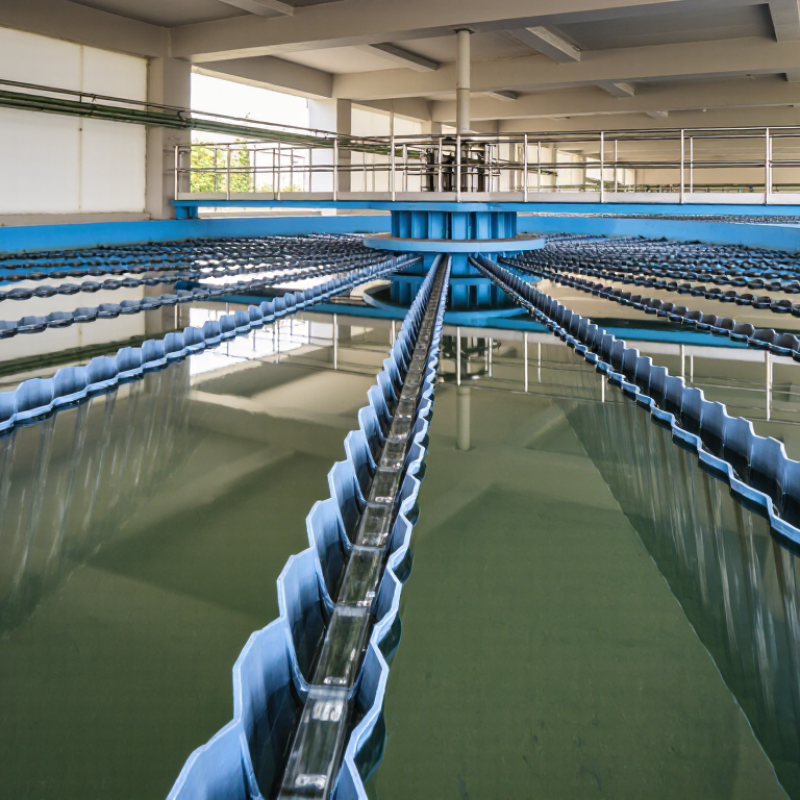
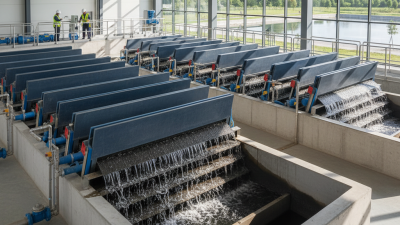
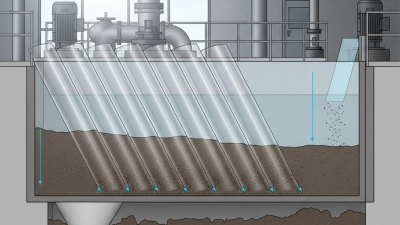
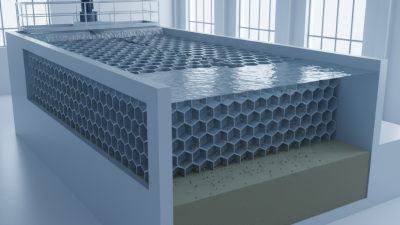
PP tube settlers are inclined channels made from polypropylene, or PP. Their main role is to improve sedimentation inside water treatment tanks. The tubes create many shallow settling paths. Suspended particles travel a shorter distance before reaching a surface. They then collect and slide downward into the sludge zone. This increases effective settling area without requiring a larger tank footprint.
Choosing the right tube settler requires more than checking tube length. Engineers should review the design flow, peak flow, water temperature, particle size, and expected solids loading. Tube angle and channel spacing also affect hydraulic performance. Narrow spacing may improve clarification, but it can clog when the water carries heavy solids. Wider spacing is easier to clean, though it uses tank volume less efficiently. PP is useful because it is lightweight, corrosion-resistant, and generally suitable for many water treatment environments. However, it still needs adequate support and protection from excessive heat or sunlight.
Practical inspection matters. Look for stable modules, even water distribution, and clear sludge removal paths. Uneven flow can create cloudy outlets, even when the settlers look properly installed. Operators should check fouling after startup, not only during annual maintenance. A small design error may become obvious during storms or seasonal temperature changes. No tube settler works perfectly in every application. Pilot testing or a careful hydraulic review can prevent an expensive assumption.
Before choosing PP tube settlers, define the raw-water problem clearly. The WHO and UNICEF Joint Monitoring Programme reported that 2.2 billion people lacked safely managed drinking water in 2022. Reliable clarification is therefore a public-health requirement, not merely an equipment upgrade. Record peak flow, average flow, turbidity, temperature, alkalinity, and seasonal changes. Test floc size after jar trials. A single turbidity reading can mislead. Stormwater often behaves differently.
Convert the required flow into hydraulic surface loading, rather than tank footprint alone. U.S. EPA design guidance commonly evaluates tube-settler applications around 3–6 m/h, but this range needs site validation. Higher loading may reduce tank size, yet weak flocs can escape with the clarified water. I would not accept a neat spreadsheet without pilot observations. Check the 60-degree tube angle, channel spacing, headloss, and sludge withdrawal route. Small changes matter.
PP offers low weight and useful chemical resistance, but material selection still requires compatibility checks with coagulants and cleaning chemicals. Specify UV protection when modules face sunlight. Also inspect flame behavior and structural performance under local temperature conditions. The WHO Guidelines for Drinking-water Quality recommend turbidity below 1 NTU to support effective disinfection, so the settler should be judged against downstream performance. Leave access for washing and replacement. Maintenance is often underestimated. A blocked tube channel can quietly reduce capacity long before operators notice. (WHO, 2022; WHO/UNICEF JMP, 2023; U.S. EPA, Water Treatment Plant Design, 1990)
| Design Dimension | Water Treatment Requirement | Recommended PP Tube Settler Selection | Typical Design Range or Target | Practical Design Considerations |
|---|---|---|---|---|
| Application | Clarification of drinking water, industrial process water, or municipal wastewater after coagulation and flocculation | Use inclined PP tube modules to increase effective settling area within an existing or new sedimentation basin | Selected according to flow, suspended solids, floc characteristics, and required effluent quality | Tube settlers improve particle separation but do not replace proper chemical dosing, rapid mixing, or flocculation. |
| Design Flow | Average, maximum daily, and peak hourly flow must be accommodated without excessive overflow velocity | Size the total projected settling area based on peak design flow rather than average flow alone | Calculate using surface overflow rate; commonly evaluated around 0.5–2.0 m/h depending on water quality and process objectives | Check hydraulic loading during peak conditions and include suitable flow distribution across the entire module area. |
| Influent Suspended Solids | Raw water or wastewater may contain variable concentrations of suspended and colloidal particles | Choose a configuration that allows regular sludge release and minimizes solids accumulation inside the channels | Confirm actual influent TSS and peak solids loading through sampling or historical operating data | High solids loading may require larger settling capacity, more frequent desludging, or upstream solids management. |
| Particle and Floc Size | Settling performance depends on floc density, strength, size distribution, and settling velocity | Use tube geometry that supports the expected floc without causing excessive blockage or shear | Verify floc formation with jar testing, pilot testing, or settling-column testing when conditions are uncertain | Fragile flocs can break during hydraulic transitions, reducing removal efficiency and increasing downstream turbidity. |
| Tube Inclination | Inclination promotes solids sliding toward the sludge collection zone | Select inclined modules with a consistent angle and secure support structure | Common inclination: approximately 55°–60° from horizontal | The angle should support self-cleaning while remaining compatible with basin depth, access, and installation constraints. |
| Tube Channel Size | Channel dimensions affect hydraulic behavior, effective settling area, and resistance to plugging | Select a channel size appropriate for floc size, solids concentration, cleaning method, and available headloss | Typical equivalent channel heights are approximately 50–100 mm; final selection requires process verification | Smaller channels provide more projected area but may be more sensitive to solids buildup and maintenance conditions. |
| Module Length | Longer channels can increase settling path length but may affect cleaning, installation, and pressure loss | Choose a length that fits basin dimensions and allows safe handling and reliable solids discharge | Common module lengths are approximately 1.0–2.0 m, subject to basin layout and structural support | Long modules should be assessed for deflection, lifting access, cleaning access, and installation tolerances. |
| Material Selection | The media must resist continuous contact with treated water, chemicals, sunlight, and temperature variation | Use UV-stabilized polypropylene suitable for the treatment environment | Confirm chemical compatibility, operating temperature, and applicable material requirements before procurement | PP is lightweight and corrosion-resistant, but prolonged outdoor exposure requires adequate UV stabilization. |
| Water Temperature | Temperature affects water viscosity, floc settling velocity, and material behavior | Verify the module’s mechanical and chemical suitability across the full operating temperature range | Use site-specific temperature data; low temperatures generally require more conservative hydraulic loading | Cold water increases viscosity and can reduce settling performance even when flow remains unchanged. |
| Chemical Exposure | Coagulants, disinfectants, pH adjustment chemicals, and cleaning agents may contact the media | Confirm compatibility with the actual chemical concentration, contact time, and cleaning procedure | Evaluate exposure to alum, ferric salts, polymers, chlorine compounds, acids, and alkalis as applicable | Compatibility should be based on the complete process environment rather than on water alone. |
| Hydraulic Distribution | Uneven flow can overload part of the settler and cause short-circuiting or local turbulence | Provide inlet baffling, perforated distribution pipes, or other suitable flow-control arrangements | Target a uniform velocity profile across the full module footprint | Hydraulic distribution should be checked at minimum, average, and peak flow conditions. |
| Sludge Removal | Settled solids must be removed before accumulation causes re-suspension or channel blockage | Match the settler arrangement with hopper bottoms, sludge scrapers, air lifts, pumps, or scheduled flushing | Set desludging frequency according to solids loading and sludge blanket behavior | A well-designed module cannot compensate for inadequate sludge collection or irregular sludge withdrawal. |
| Structural Support | Modules must remain stable under hydraulic forces, maintenance loads, and possible buoyancy effects | Use corrosion-resistant support frames, retaining members, and anchoring suitable for the basin | Design for full operating depth, empty-basin conditions, cleaning loads, and local access loads | Support spacing and fixing details should be verified by a qualified structural or process engineer. |
| Maintenance and Cleaning | The system should allow inspection, flushing, removal of lodged solids, and replacement of damaged sections | Select modular, accessible units with compatible cleaning methods and removable sections where necessary | Define inspection and cleaning intervals from operating experience and solids loading | Provide safe access and avoid high-pressure cleaning methods that could deform or damage the media. |
| Effluent Quality Target | The required turbidity, TSS, or downstream filter loading determines the clarification duty | Select surface area and hydraulic loading only after defining the required effluent performance | Set project-specific targets for turbidity and TSS; validate through jar, pilot, or full-scale testing | Performance depends on the complete treatment train, not only on tube geometry. |
| Installation Constraints | Existing basin dimensions, access openings, water depth, freeboard, and lifting capacity may limit options | Choose module dimensions and assembly sections that can be transported and installed safely on site | Confirm basin length, width, depth, access route, freeboard, and available installation clearance | A site survey should precede final fabrication to prevent dimensional conflicts during installation. |
Selecting tube geometry, materials, and surface loading capacity requires more than comparing catalog dimensions. Inclined PP tubes commonly use a 60-degree angle to support sludge sliding and reduce solids accumulation. Smaller tube diameters improve settling distance, but they can clog when flocs contain fibers, algae, or poorly screened debris. Wider channels tolerate rougher water, although they require more installation area.
PP offers strong resistance to many water-treatment chemicals and remains lightweight during handling. However, temperature limits, sunlight exposure, and long-term stiffness still deserve attention. A protected installation is safer than assuming PP will perform equally outdoors.
Check wall thickness, joint quality, support frames, and access for cleaning. These details are easy to overlook.
Surface loading capacity is usually expressed as flow divided by the settlers’ projected surface area. It should match the actual peak flow, not only the daily average. A high loading rate may work with dense, well-formed flocs but fail after chemical dosing changes. Pilot testing or jar-test results can improve the estimate.
In practical design reviews, sludge withdrawal often controls performance more than tube length. That finding can be uncomfortable. A perfect geometry calculation cannot rescue a blocked hopper or uneven water distribution. Allow inspection space, verify inlet baffles, and compare real floc behavior with the design assumptions.
Choosing PP tube settlers requires more than comparing price and surface area. Installation method strongly affects clarification performance. Modules are commonly placed at an inclined angle, often near 60 degrees, inside a rigid support frame. The frame must remain level, because uneven spacing can create short-circuiting and dead zones. Fit matters. Leave enough clearance above the modules for lifting, inspection, and sludge removal. Poor access may reduce maintenance quality, even when the original installation looks acceptable.
Water distribution deserves close attention. A calm inlet zone helps each tube receive a similar flow rate. Excessive turbulence can carry solids through the settler, while insufficient flow may cause deposits inside the channels. During commissioning, operators should check water levels, flow patterns, and visible solids accumulation. Small adjustments to inlet baffles can prevent larger operating problems later.
Maintenance needs depend on the raw water, temperature, and loading rate. Routine inspections should look for algae, mineral scale, cracked sheets, and blocked passages. Low-pressure flushing can remove loose deposits, but aggressive cleaning may deform the PP structure. UV exposure is another concern, especially for outdoor tanks; protective covers can slow material aging. Service life is not a fixed number. A well-installed system may perform for many years, while heat, chemicals, abrasion, or poor cleaning can shorten that period. I would avoid promising a precise lifespan without reviewing site conditions and inspection records. A longer design life is not always the better choice if replacement access is difficult.
Supplier evaluation should start with evidence, not the lowest quotation. Request polypropylene resin specifications, UV-resistance data, wall-thickness tolerances, welding details, and load calculations. Ask for references from plants treating similar water, not only product photographs. A supplier should explain effective settling area, tube inclination, hydraulic loading, and inlet distribution. I would also inspect sample modules by hand. Brittle sheets, uneven joints, or sharp edges often reveal weak manufacturing control.
Cost comparison must include installation, support frames, cleaning, replacement, transport, and sludge handling. The U.S. EPA’s 2023 Drinking Water Infrastructure Needs Survey estimates $625 billion in drinking-water investment needs over 20 years. That figure shows why lifecycle cost matters more than purchase price. A cheaper module may demand frequent access or create uneven flow, reducing actual capacity. Measure it. Ask suppliers for a five-year cost model using your flow, temperature, and raw-water quality.
Treatment performance needs measurable acceptance criteria. WHO’s Guidelines for Drinking-water Quality identify turbidity below 1 NTU as important for effective disinfection, although local requirements may be stricter. Test outlet turbidity, headloss, flow distribution, and sludge accumulation during commissioning. PP tube settlers can improve clarification, but they cannot repair poor coagulation. This is where many designs disappoint. I would require pilot or field data, while admitting that short tests may not represent seasonal algae, cold water, or storm-driven solids. Performance guarantees should state test methods, sampling points, and operating limits clearly.