Leave Your Message

China Best PP Tube Settler Manufacturer and Supplier

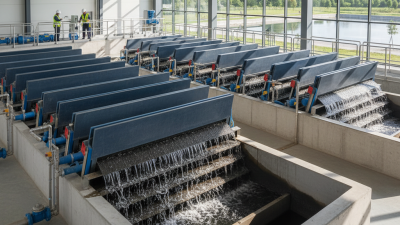
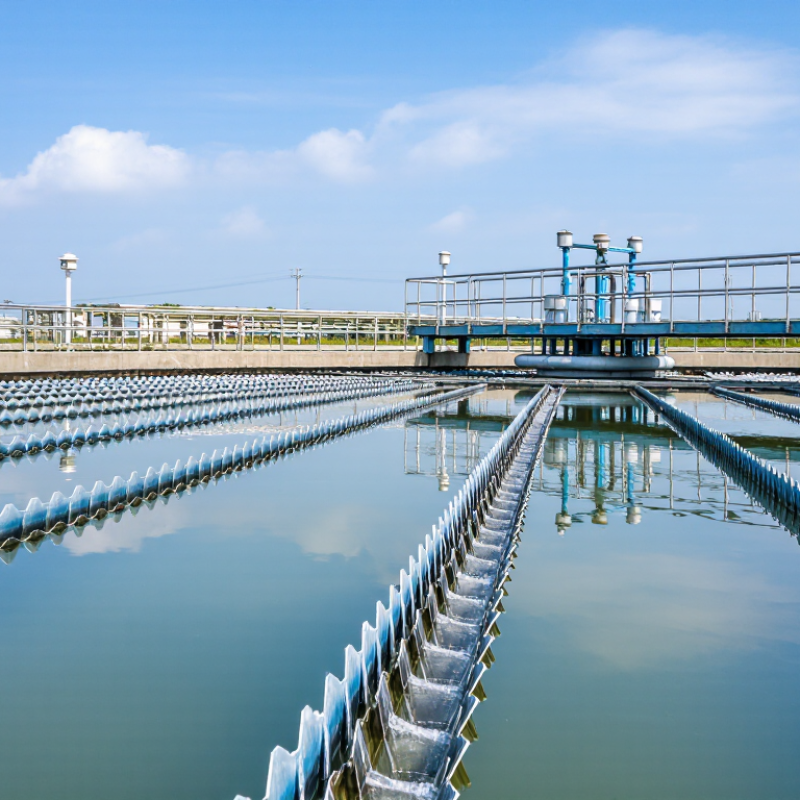
Choosing a China-based PP Tube Settler manufacturer requires more than comparing prices. A reliable supplier should understand water treatment design, production control, and field installation. Pp Tube Settler modules use inclined channels to increase effective settling area inside sedimentation tanks. They can help remove suspended solids while reducing tank space requirements. The principle is simple. The details are not.

Experienced manufacturers usually offer polypropylene sheets with consistent thickness, clean welding, and stable geometry. Honeycomb angles, tube length, module dimensions, and flow distribution all influence actual performance. A professional supplier should review inlet conditions, surface loading, sludge characteristics, and tank layout before recommending a model. It should also provide material information, drawings, installation guidance, and inspection records. These details make technical decisions easier and more reliable.

China has many PP tube settler factories, but capability varies widely. Some suppliers focus mainly on low-cost production. Others provide engineering support, sample testing, and customized modules for municipal, industrial, and drinking water applications. A useful evaluation includes raw material traceability, dimensional checks, packing protection, and communication during delivery. Fit matters. A well-made module can still perform poorly when the inlet flow is uneven or maintenance is ignored. This point deserves honest attention.

The best manufacturer is not always the largest or cheapest. It is the supplier that matches verified experience with your treatment conditions. Before purchasing, request technical data and confirm practical limitations. With careful selection, a Pp Tube Settler supplier can support clearer water, efficient tank use, and a more dependable treatment process.
China Best PP Tube Settler Manufacturer and Supplier

PP Tube Settler Basics: 60° Inclination, 50 mm Channels, and 1 m Modules

China Best PP Tube Settler Manufacturer and Supplier

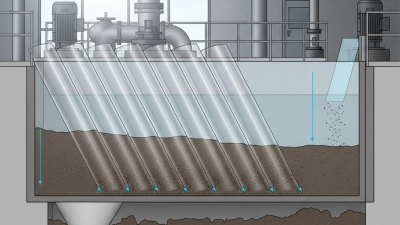
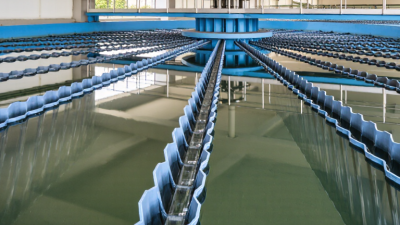
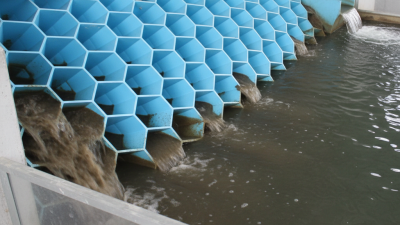
PP tube settlers use inclined channels to improve solid–liquid separation in compact sedimentation tanks. The 60° inclination supports steady sludge movement toward the hopper. It also reduces the risk of solids remaining on channel surfaces. A 50 mm channel width offers a practical balance between settling efficiency and maintenance access.

Each 1 m module is easier to handle during installation. Workers can lift, align, and inspect sections without large lifting equipment. Modules should sit firmly on suitable supports, with even spacing across the tank. Small alignment errors can create uneven flow. That detail is often underestimated.

Flow distribution matters as much as tube geometry. Inlet turbulence can disturb settled particles before clarification begins. Baffles, level control, and suitable hydraulic loading should be checked together. PP offers good resistance to moisture and many wastewater conditions, but temperature and chemical compatibility still require review. The material is not automatically suitable for every process.

Routine inspections should look for blocked channels, warped panels, loose supports, and sludge accumulation. Cleaning must avoid damaging the tube surfaces. In real projects, oversized modules may complicate access, while narrow channels may clog under heavy solids loading. The 50 mm choice is useful, but not universal. Experienced suppliers should verify tank dimensions, flow rate, suspended solids, and installation conditions before production.
PP Material Data: 0.90–0.91 g/cm³ Density and 80°C Service Limit

China Best PP Tube Settler Manufacturer and Supplier

PP tube settlers support compact clarification systems by increasing effective settling area. Their polypropylene structure is light, chemically resistant, and practical for wastewater treatment installations. The material density is typically 0.90–0.91 g/cm³, so each module is much lighter than metal equipment. This simplifies handling, cutting, and placement inside existing tanks.

Low density also creates a design responsibility. Tube packs can shift during filling, cleaning, or turbulent flow if supports are weak. Keep it anchored. Stainless steel or coated structural frames should hold the modules firmly without crushing the channels. In field installation, accurate alignment matters because blocked passages reduce flow distribution and settling performance.

The recommended service limit is commonly 80°C. This value should not be treated as a universal operating target. Continuous heat, sunlight, chemical exposure, and mechanical loading can gradually affect polypropylene stiffness. Heat changes everything. Engineers should check actual water temperature, cleaning conditions, and support spacing before production. A short temperature peak may be acceptable, while constant operation near 80°C needs careful review. This is where specifications can be imperfect; suppliers should provide test data, dimensional tolerances, and installation guidance instead of relying on density alone. Properly selected PP tube settlers offer efficient solids separation, but performance depends on the whole system, not the plastic module by itself.

Hydraulic Design: 0.5–2.0 m³/m²·h Loading and 1–1.5 m Tube Length

A reliable PP tube settler begins with hydraulic discipline, not plastic modules alone. A design loading of 0.5–2.0 m³/m²·h provides a practical range for clarification trials. Lower loading suits cold water, heavy solids, or seasonal algae. The upper limit requires excellent flow distribution. Small dead zones can reduce performance quickly. Tube length matters. With 1–1.5 m tubes, inclined channels shorten the settling distance and support compact tank layouts. These parameters reflect established practice discussed in AWWA/ASCE Water Treatment Plant Design, 6th edition.

During commissioning, engineers should measure inlet flow, outlet turbidity, sludge depth, and channel distribution. WHO’s Guidelines for Drinking-water Quality, incorporating the 2022 addenda, identifies turbidity below 1 NTU as an important operational target for effective disinfection.

A tube settler cannot achieve that result alone. Coagulation, floc strength, and downstream filtration remain decisive. That is easy to forget. PP modules should also be checked for dimensional consistency, wall thickness, UV exposure, and chemical compatibility. Supplier documentation should include resin information and inspection records.

In practice, a 1.5 m tube at 2.0 m³/m²·h may perform worse than a 1 m tube at a carefully controlled loading. The published range is useful, but site water decides the final design.

Manufacturing Standards: 2–5 mm Sheets, Heat Welding, and UV Protection

China Best PP Tube Settler Manufacturer and Supplier

Reliable PP tube settlers begin with controlled sheet manufacturing. Sheets between 2 and 5 mm provide a practical balance between stiffness, weight, and installation effort. Thicker sheets resist handling damage, but they can increase material use and welding time. Each batch should include thickness checks, surface inspection, and traceable production records.

Heat welding requires clean surfaces, stable temperature control, and consistent pressure. Poor fusion can create weak seams inside humid treatment environments. Experienced suppliers inspect weld beads and test representative joints before shipment. A 2 mm sheet may perform well, but not in every basin. Flow velocity, support spacing, and module size still require engineering review. That assumption needs checking.

UV protection also deserves evidence, not vague claims. ISO 4892-3 provides a recognized method for evaluating plastics under fluorescent ultraviolet exposure. The WHO and UNICEF Joint Monitoring Programme reported in 2023 that 2.2 billion people lacked safely managed drinking water. This pressure increases demand for durable treatment equipment, especially in exposed installations. UV-stabilized polypropylene can slow embrittlement, yet protection depends on additive quality, exposure time, and local sunlight. Suppliers should provide material specifications, test conditions, and realistic service guidance. Even good plastic can age early when storage and installation are careless.

PP Tube Settler Manufacturing Standard: Sheet Thickness

PP tube settlers are commonly manufactured with polypropylene sheets in the 2–5 mm thickness range. Heat welding is used to form the modules, while UV protection helps improve outdoor durability. The chart shows the standard thickness options referenced in the manufacturing specification.

Supplier Evaluation: Capacity, Chemical Resistance, and ISO 9001 Quality

China Best PP Tube Settler Manufacturer and Supplier

Selecting a PP tube settler supplier requires more than comparing prices. Capacity should match project flow, dimensions, and installation conditions. Ask for monthly output, mold numbers, and production lead time. A reliable supplier can show batch records, inspection photos, and loading plans. These details reveal whether capacity is real or only promised.

Chemical resistance also deserves careful testing. Polypropylene usually performs well against many acids, alkalis, and salts at moderate temperatures. However, temperature, concentration, and exposure time can change performance. ASTM D543 provides a recognized method for evaluating plastics exposed to chemical reagents. Request test results using your actual wastewater chemistry. Do not rely on a general resistance chart alone. That shortcut sometimes fails.

Tips: Check wall thickness at several points. Ask for UV stabilization when outdoor storage is expected. Review dimensional tolerances before installation. ISO 9001 is useful, but it is not a product-performance certificate. The ISO Survey 2022 recorded 1,265,216 ISO 9001 certificates worldwide. This shows broad adoption, not automatic quality. Review the supplier’s corrective-action records, calibration controls, and traceability system. A strong audit should connect resin batches to finished tube modules. Some suppliers may pass paperwork checks yet lack process discipline. That possibility deserves honest attention. Pilot testing remains sensible for difficult chemical conditions and high-loading applications.

China Best PP Tube Settler Manufacturer and Supplier - Supplier Evaluation: Capacity, Chemical Resistance, and ISO 9001 Quality
Evaluation Dimension Key Indicator Evidence or Test Method Recommended Acceptance Benchmark Evaluation Rating
Production Capacity Manufacturing process and equipment Review the production process, thermoforming or extrusion equipment, welding capability, tooling control, and preventive-maintenance records. Documented production flow with controlled forming, cutting, assembly, inspection, and packaging procedures. Mandatory
Production Capacity Rated output and lead-time control Check monthly production records, order history, staffing levels, equipment availability, and delivery performance for comparable projects. Capacity should be demonstrated with traceable records rather than only a stated annual output. Lead times should be confirmed in a written quotation. High Priority
Product Dimensions Tube length, width, height, wall thickness, and pitch Verify drawings and inspect samples using calibrated rulers, calipers, and gauges. Confirm dimensional tolerances in the purchase specification. Dimensions must match the approved drawing and remain consistent across sampled pieces. Any tolerance must be defined before production. Mandatory
Hydraulic Performance Settling surface area and hydraulic loading Review the design calculation based on projected settling area, tank geometry, flow rate, water temperature, and target particle removal. Supplier shall provide a project-specific hydraulic calculation. Performance must not be judged only by the number of tubes or nominal volume. Mandatory
Material Quality Polypropylene identification and consistency Review the raw-material certificate, batch traceability, visual condition, density data, and incoming-material inspection records. Material shall be identified as polypropylene suitable for the intended water-treatment service, with batch records retained for traceability. Mandatory
Chemical Resistance Resistance to common water-treatment chemicals Assess compatibility with the actual service chemicals, concentration, temperature, exposure time, and mechanical loading. Use supplier technical data and chemical-compatibility references. PP generally provides good resistance to many aqueous acids, alkalis, and salts at moderate temperatures, but compatibility must be confirmed for each chemical and concentration. High Priority
Chemical Resistance Limitations and operating temperature Review the technical datasheet and application-specific temperature limits. Confirm the effect of oxidizing agents, aromatic solvents, chlorinated solvents, and elevated temperature. Supplier shall state exclusions clearly. PP should not be accepted for a chemical service without a documented compatibility review; actual limits depend on formulation and design. Mandatory
Mechanical Durability Rigidity, deformation, UV exposure, and handling strength Inspect finished modules for warping, cracks, sharp edges, incomplete welds, and uniform spacing. Review storage and outdoor-exposure recommendations. Modules should retain their geometry during lifting, installation, and normal service. Outdoor storage should include protection from prolonged direct sunlight unless UV stabilization is specified. High Priority
ISO 9001 Quality Quality-management certification Verify an active ISO 9001:2015 certificate issued by an accredited certification body, including legal entity, site address, scope, issue date, and expiry date. Certificate details must match the manufacturing site and cover the relevant design, production, or supply activities. A logo alone is not sufficient evidence. Mandatory
ISO 9001 Quality Inspection and nonconformance control Review inspection plans, calibration records, nonconformance reports, corrective-action records, and final-release documentation. Documented controls should cover raw materials, in-process dimensions, finished-product inspection, corrective action, and shipment release. Mandatory
Quality Assurance Sample approval and factory acceptance Approve a representative sample or first article before mass production. Record dimensions, appearance, joint quality, packaging, and identification marks. Mass production should begin only after written sample approval and agreement on inspection criteria and allowable tolerances. High Priority
Documentation Technical and shipment documents Check whether the supplier can provide drawings, material information, installation guidance, inspection records, packing lists, and certificates of conformity. Documents should be complete, consistent with the approved design, and supplied before installation or final acceptance. High Priority
After-Sales Support Installation guidance and warranty terms Review written warranty conditions, response procedures, spare-part availability, installation instructions, and technical-support channels. Warranty scope, exclusions, response time, and responsibilities for transport, installation, and chemical exposure should be stated clearly in the contract. Recommended