Top 2025 Disc Diffuser Trends: Enhance Your Water Treatment Efficiency
In the evolving landscape of water treatment technology, the significance of disc diffusers has come to the forefront. As the industry seeks to enhance efficiency and sustainability, 2025 promises to bring innovative trends that will reshape how we approach aeration processes. According to renowned industry expert Dr. Emily Thompson, a leader in water management technologies, "The future of water treatment lies in our ability to optimize systems, and disc diffusers are key to unlocking that potential."
As we delve into the top trends for disk diffusers in 2025, it becomes evident that optimizing air distribution and energy consumption will be paramount. Advances in materials and design are paving the way for more efficient operation, ultimately contributing to improved water quality and reduced operational costs. By harnessing the latest innovations, facilities can significantly improve their performance and environmental impact.
This exploration of disc diffuser trends is not only about technological advancements; it also highlights the collaborative efforts within the industry to foster sustainable practices. By embracing these trends, water treatment facilities can set new standards for efficiency and resilience, ensuring a cleaner and more sustainable future for communities worldwide.

Emerging Materials Used in 2025 Disc Diffuser Technology
The advancements in disc diffuser technology for water treatment are significantly influenced by the use of emerging materials. As industries aim to enhance efficiency and reduce operational costs, manufacturers are turning to innovative materials such as advanced polymers and composite structures. According to a recent report from the Water Environment Federation, the integration of these materials can improve oxygen transfer efficiency by up to 20%, resulting in substantial energy savings and reduced environmental impact.
Furthermore, developments in ceramic-based diffusers are gaining traction in 2025. These ceramic diffusers not only provide superior durability and resistance to fouling but also have been shown to enhance the aeration process in wastewater treatment systems. A study published in the Journal of Water Process Engineering indicates that systems employing ceramic disc diffusers can achieve a reduction in maintenance costs by as much as 30% over traditional materials. This shift towards high-performance, sustainable materials reflects a broader trend in the water treatment industry towards greater efficiency and environmental responsibility.
Innovative Design Features for Enhanced Water Treatment Efficiency
The landscape of water treatment technology is evolving, and the emergence of innovative design features in disc diffusers is a key factor enhancing operational efficiency. According to a recent report from the Water Environment Federation, advancements in diffuser design have led to a notable increase in oxygen transfer efficiency, currently averaging between 2.5 to 3.5 kg O2/kWh for cutting-edge systems. This effectiveness can reduce energy consumption by up to 20%, providing significant cost savings and environmental benefits to wastewater treatment facilities.
One notable trend is the integration of advanced materials that improve durability and resistance to fouling. Research from the American Society of Civil Engineers has shown that diffusers made from high-grade polypropylene can extend service life by 30% when compared to conventional rubber alternatives. Additionally, the incorporation of customizable perforation patterns has been shown to optimize airflow distribution, resulting in enhanced mixing and treatment performance. Facilities adopting these innovative designs often report a decrease in maintenance needs and an increase in overall treatment efficiency, aligning with sustainability goals in water management practices.
Top 2025 Disc Diffuser Trends: Enhance Your Water Treatment Efficiency
| Design Feature |
Efficiency Improvement (%) |
Material Used |
Application Area |
| Aeration Profiles |
25% |
Silicone Rubber |
Wastewater Treatment |
| Self-Cleaning Technology |
30% |
Polypropylene |
Industrial Applications |
| Modular Design |
20% |
PVC |
Municipal Wastewater |
| Flexible Airflow Management |
22% |
Nylon |
Aquaculture |
| Low-Head Design |
15% |
Stainless Steel |
Storm Water Management |
Sustainability Trends Impacting Disc Diffuser Development
The development of disc diffusers in water treatment systems is increasingly shaped by sustainability trends that prioritize environmental responsibility and resource efficiency. As industries strive to reduce their carbon footprints, innovations in disc diffuser technology are emerging to promote better energy usage and lower emissions.
These advancements not only enhance the overall effectiveness of wastewater treatment processes but also contribute to a more sustainable approach in managing our vital water resources.
Moreover, the rising need to address environmental concerns is pushing manufacturers to adopt more sustainable materials in the construction of disc diffusers. This shift not only reduces the ecological impact of production but also enhances the durability and lifespan of the diffusers themselves. As a result, facilities are increasingly opting for solutions that align with green initiatives, focusing on reducing energy consumption during operation and minimizing waste throughout the lifecycle of the equipment. Collaboration among stakeholders in the water treatment sector is essential to further propel these sustainability trends, ensuring that technological advancements remain rooted in environmental stewardship.
Comparative Analysis of Disc Diffusers vs. Traditional Aeration Systems
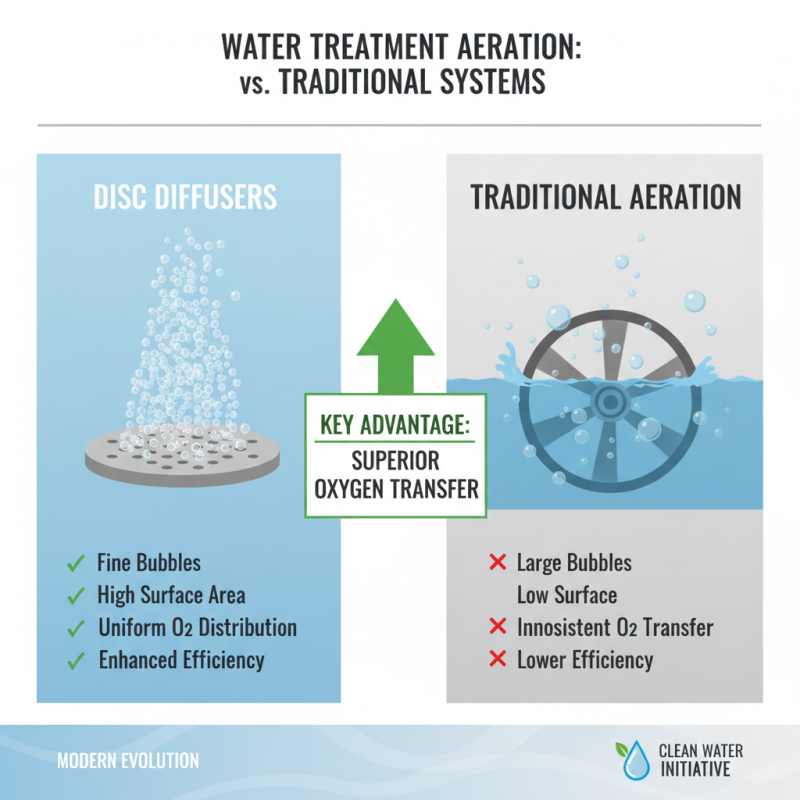
The ongoing evolution of water treatment technologies has led to a comparative analysis of disc diffusers and traditional aeration systems, highlighting distinct advantages that the former offers. Traditional aeration systems often rely on mechanical agitation to introduce air into water, which can lead to inconsistent oxygen transfer efficiency. In contrast, disc diffusers utilize a network of perforated membranes that release fine bubbles, significantly enhancing the surface area for gas exchange. This improvement not only accelerates the aeration process but also ensures more uniform distribution of oxygen throughout the treatment system.
Moreover, disc diffusers present operational and maintenance benefits compared to traditional systems. Mechanical systems may create excessive turbulence and require frequent maintenance due to wear and tear. In contrast, disc diffusers operate with lower energy consumption and reduced noise levels, contributing to a more sustainable approach in water treatment facilities. Additionally, the modular design of disc diffusers allows for easier scalability and adaptability to varying water treatment demands, making them a flexible choice for modern applications. As water treatment needs evolve, the advantages of disc diffusers are becoming increasingly clear, positioning them as a leading technology in enhancing overall efficiency.
Future Projections: The Role of Automation in Disc Diffuser Applications
The increasing complexity of water treatment processes has spurred significant advancements in automation technology, particularly in the realm of disc diffuser applications. As facilities strive for enhanced efficiency and compliance with environmental standards, automation systems have begun to play a crucial role in monitoring and optimizing diffuser performance. Intelligent sensors and control algorithms can now provide real-time data on air flow rates, pressure levels, and oxygen transfer efficiency, allowing for immediate adjustments to be made as necessary. This proactive approach not only improves operational efficiency but also minimizes energy consumption, which is a critical factor in sustainable water treatment.
Looking ahead to 2025 and beyond, the integration of automation in disc diffuser technology is expected to evolve further with the advent of machine learning and artificial intelligence. These technologies can analyze historical data to predict performance trends and identify potential issues before they escalate. Such predictive maintenance capabilities will empower operators to make informed decisions, ensuring that systems run at optimal levels and reduce downtime. Additionally, automation can streamline the calibration and maintenance processes for disc diffusers, decreasing the operational burden on staff and allowing them to focus on more strategic initiatives within water treatment facilities. The marriage of automation and disc diffuser technology signifies a transformative step toward achieving next-generation efficiency in water treatment solutions.
Top 2025 Disc Diffuser Trends: Enhance Your Water Treatment Efficiency
This chart illustrates the projected adoption of automation technologies in disc diffuser applications within water treatment facilities from 2023 to 2025.

 +86 13600513715
 CONTACT NUMBER
 CONTACT NUMBER