Leave Your Message

Why Use a Drum Filter in Aquaculture?

Aquaculture is expanding, but production growth increases pressure on water quality, energy use, and farm reliability. The FAO’s The State of World Fisheries and Aquaculture 2024 reported 185.4 million tonnes of global aquatic animal production in 2022. Aquaculture supplied 94.4 million tonnes, exceeding capture fisheries for the first time. More fish means more suspended solids.

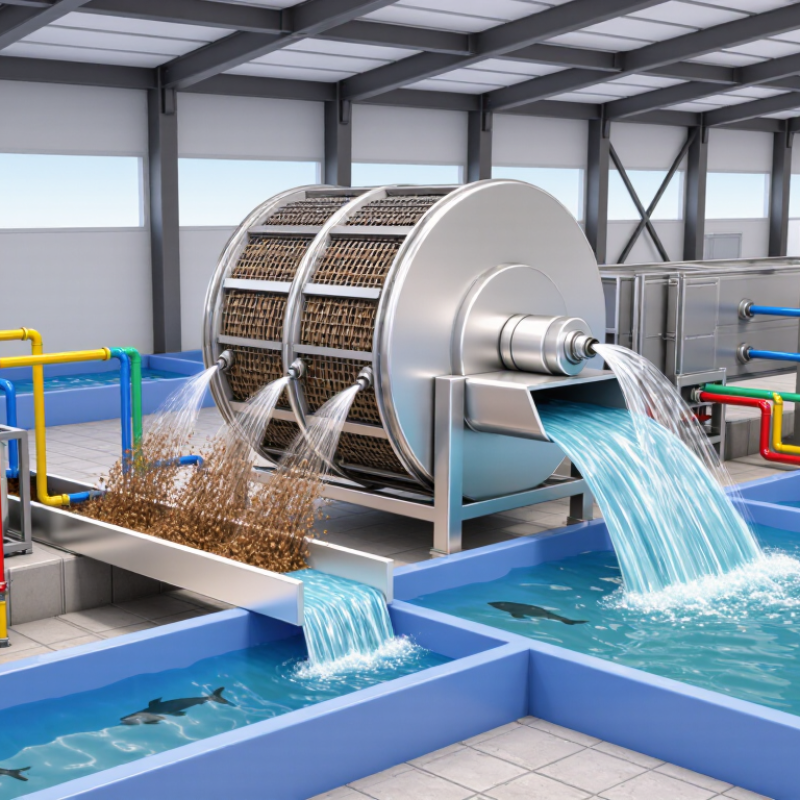
That is where Drum Filter Aquaculture becomes practical. A drum filter uses a rotating microscreen to separate feces, uneaten feed, and other particles from circulating water. As the screen loads, spray nozzles wash captured solids into a collection channel. Cleaner water then returns to tanks, biofilters, or oxygenation equipment. The result can be lower solids accumulation and more stable treatment conditions. Not instant perfection.

The U.S. Environmental Protection Agency identifies solids management as a key concern in aquaculture wastewater control. Research and engineering guidance for recirculating aquaculture systems also emphasizes rapid removal of settleable and suspended waste. However, performance depends on mesh size, hydraulic flow, stocking density, feed quality, and maintenance. A 60-micron screen may capture finer particles, but it can require more frequent backwashing. A larger mesh may reduce clogging, yet allow more solids to pass.

Operators should inspect spray pressure, screen damage, sludge discharge, and water levels every day. A neglected filter can become a bottleneck, not a solution. FAO’s sustainability reporting also highlights resource efficiency, water stewardship, and responsible intensification. Therefore, choosing a drum filter requires measured design, verified supplier data, and site-specific testing. The strongest system is rarely the most expensive one. It is the one that consistently protects fish health, biofilter performance, and farm records.
Why Use a Drum Filter in Aquaculture?

What Is a Drum Filter in Aquaculture?

A drum filter in aquaculture is a mechanical device that removes solid waste from culture water. Water enters a rotating drum covered with fine filter mesh. Clean water passes through the screen, while feces, uneaten feed, and plant debris remain outside. As the mesh becomes blocked, water pressure rises. A sensor then starts a rinse cycle, lifting waste into a collection channel.

This filter is common in recirculating aquaculture systems because it reduces the solids entering biofilters and fish tanks. It does not replace biological filtration. It only separates particles. In practice, correct mesh size matters. A very fine screen captures more waste but may require frequent washing. A coarse screen uses less water, yet smaller particles can escape. This balance is easy to underestimate.

Tips: Check the rinse nozzles, spray pressure, and waste outlet every day. Watch for unusual water levels or slow drum movement. Keep spare seals and a clean inspection light nearby. A drum filter is not maintenance-free. I have seen systems perform poorly because operators trusted the sensor too much. Regular observation still matters, especially after stocking changes or heavy feeding. A simple log can reveal gradual problems before water clarity and fish behavior change.
Why Use a Drum Filter in Aquaculture?

A drum filter is a mechanical water-treatment device that removes suspended solids before they break down into dissolved waste. Aquaculture systems commonly use microscreens with nominal openings from approximately 40 to 100 micrometers, selected according to fish size, solids loading, and required water clarity.

How to read the chart: Smaller screen openings capture finer particles but may require more frequent cleaning. Larger openings allow higher flow with a lower cleaning demand, while removing coarser solids.

How Does a Drum Filter Remove Solids from Water?

Why Use a Drum Filter in Aquaculture?

How Does a Drum Filter Remove Solids from Water?

A drum filter removes suspended solids before they decompose inside the culture system. Water enters a rotating drum covered with a fine mesh screen. Clean water passes through, while feces, uneaten feed, and biofilm collect on the screen. When the mesh becomes restricted, a spray bar washes trapped material into a separate waste channel. The process is mechanical and continuous.

Screen openings commonly range from 60 to 100 micrometres, according to Southern Regional Aquaculture Center guidance on recirculating systems. Smaller openings capture more particles, but they also demand stronger cleaning and careful flow control. A clogged screen can reduce water exchange quickly. That detail is easy to underestimate.

The FAO’s State of World Fisheries and Aquaculture 2024 reported 94.4 million tonnes of farmed aquatic animals in 2022. At this scale, reliable solids management directly supports water quality and labor efficiency. Removing waste early reduces the organic load reaching biological filters, where decomposition consumes oxygen and produces ammonia. However, a drum filter does not remove every dissolved pollutant or fine colloid. Performance changes with particle size, feed type, hydraulic loading, and maintenance. In real facilities, operators should inspect the waste trough and spray nozzles daily. Small oversights matter.

What Are the Main Benefits of Using a Drum Filter?

Why Use a Drum Filter in Aquaculture?

In recirculating aquaculture systems, a drum filter removes suspended waste before it burdens biofiltration. Water passes through a fine rotating screen, while collected solids are rinsed into a separate drain. This simple separation can improve water clarity and reduce organic buildup in tanks and pipes. Cleaner water matters. Fish often feed more consistently when waste does not remain in the culture environment. Operators also spend less time vacuuming tanks, especially during heavy feeding periods.

That saves labor, but it does not eliminate maintenance. Screen panels need regular inspection, and spray nozzles can clog when incoming water carries fibrous material. A properly sized unit can lower the load on biological filters and help stabilize oxygen demand. It may also support more predictable water quality when stocking density changes. Still, clear water can create false confidence.

A drum filter is not a complete treatment system. It does not remove dissolved ammonia, pathogens, or every fine particle. Poor sizing can cause frequent backwashing, wasted water, and disappointing performance. From practical operation, the best results come from matching mesh size and flow rate to the species. Feed type matters too. Routine records can reveal whether the filter is genuinely improving conditions or merely hiding an overloaded system. That distinction deserves careful attention.

Which Aquaculture Systems Need a Drum Filter?

A drum filter suits aquaculture systems that produce continuous suspended waste. Recirculating aquaculture systems usually benefit most. Fish feed, feces, and biofilm fragments quickly circulate through pumps and biofilters. A rotating microscreen captures these particles before they break down. Cleaner water follows. In a working RAS, this can reduce maintenance and protect nitrifying media from excess solids. However, selection should follow measured flow and solids loading, not tank volume alone.

High-density tanks, indoor hatcheries, and nursery systems often need fine mechanical filtration. Small particles can irritate fish gills and reduce water clarity. A properly sized drum filter removes solids automatically during routine backwash cycles. It also reduces labor from settling tanks or filter socks. Flow-through farms may need one when incoming water carries algae, silt, or upstream waste. Placement before a biofilter, degasser, or oxygenation unit can improve overall treatment performance.

Low-density ponds do not always require a drum filter. Natural settling, screens, or periodic discharge may be adequate. Not always. The decision changes when stocking density rises or water reuse becomes important. A common field lesson involves undersized units clogging during feeding peaks. That is usually a planning problem, not equipment failure. Operators should check peak flow, screen opening, backwash water, and emergency bypass capacity. Regular inspection remains essential because worn seals can allow solids to pass. Sometimes, a larger settling stage works better than finer screening. Aquaculture water is rarely uniform.

Why Use a Drum Filter in Aquaculture? - Which Aquaculture Systems Need a Drum Filter?

A drum filter is a mechanical filtration unit that removes suspended solids from recirculating or flow-through water before those particles break down into dissolved pollutants. The table below compares common aquaculture systems and indicates when a drum filter is technically useful.

Aquaculture System Typical Water Arrangement Main Solid-Waste Challenge Drum Filter Suitability Why a Drum Filter Helps Important Design Considerations
Recirculating Aquaculture System (RAS) Water is continuously treated and returned to culture tanks. Uneaten feed and fecal solids must be removed quickly to protect biofilters and maintain water quality. Very High Provides continuous fine mechanical separation and reduces the organic load entering the biofilter. Select capacity according to peak flow, solids loading, screen opening, water temperature, and the required bypass arrangement.
Indoor Fish Hatchery Small tanks, raceways, or incubators operate in a controlled building. Fine waste particles and feed residues can accumulate rapidly in high-density production areas. High Supports stable water clarity and helps protect sensitive early life stages from deteriorating water quality. Use an appropriately fine screen while avoiding excessive head loss; provide safe operation during cleaning and maintenance.
Aquaponics System Fish production is hydraulically connected to hydroponic plant production. Fish solids can clog irrigation lines, reduce biofilter performance, and interfere with nutrient management. High Separates larger suspended solids before water reaches plant beds, clarifiers, or biological treatment stages. Do not remove every dissolved nutrient; coordinate solids capture with mineralization and plant nutrient requirements.
Flow-Through Raceway Fresh water enters continuously and discharged water leaves the production unit. Solids are diluted by high water flow but may still accumulate or be discharged untreated. Medium to High Can reduce suspended solids in the effluent and improve waste capture where discharge regulations or water reuse goals apply. Assess whether the available hydraulic gradient and flow rate are sufficient; settling or swirl separation may be more economical at low solids concentrations.
Intensive Tank Culture High fish biomass is held in circular or rectangular tanks with active water exchange. High feeding rates generate concentrated fecal waste and uneaten feed. High Captures waste before it is fragmented by pumps or converted into ammonia and other dissolved compounds. Tank hydraulics, drain design, peak feeding rate, and the location of the filter strongly affect collection efficiency.
Recirculating Shrimp System Shrimp are raised in lined tanks with water recirculation and biological treatment. Fine organic particles, molted shells, and feed residues can increase oxygen demand and clog downstream equipment. High Offers automatic solids separation and helps maintain cleaner water in systems with high organic loading. Use corrosion-resistant materials where salinity is elevated and account for biofloc practices if solids are intentionally retained.
Biofloc Technology System Microbial flocs remain suspended to convert nitrogenous waste into microbial biomass. Removing too many suspended flocs can disrupt the intended microbial community and carbon-to-nitrogen balance. Usually Low May be useful for partial polishing or emergency solids control, but routine fine filtration can remove beneficial floc. Use only when the production protocol requires solids reduction; monitor total suspended solids, dissolved oxygen, alkalinity, and microbial stability.
Pond-Based Aquaculture Large outdoor ponds provide most of the biological treatment and water storage. Solids are spread across a large area and are not normally concentrated in a central flow stream. Usually Low Can be beneficial on intake, discharge, or partial-reuse lines rather than as the primary pond-treatment method. Pre-screen leaves and debris first; compare the cost and maintenance requirements with settling basins, screens, or constructed wetlands.
Cage or Net-Pen Culture Fish are held in cages located in lakes, reservoirs, rivers, or coastal waters. Waste disperses directly into the surrounding water instead of passing through a controlled filtration loop. Generally Low A drum filter is not normally installed on the cage itself because there is no practical closed-water flow path. Environmental management usually focuses on site selection, stocking density, feed efficiency, fallowing, and monitoring of benthic impacts.
Aquaculture Water-Reuse Facility Water from culture units is treated for repeated use or discharge compliance. Suspended solids can consume oxygen, carry pathogens, and increase the load on biological or disinfection processes. High Improves pretreatment efficiency and can reduce the solids burden on biofilters, protein skimmers, UV units, and oxygenation equipment. Install the filter before sensitive downstream equipment and provide automatic spray cleaning, sludge collection, and reliable overflow protection.

Practical rule: Drum filters are most valuable when water is recirculated, solids are concentrated, and rapid automatic removal is required. They are less suitable when suspended solids are intentionally retained, as in many biofloc systems, or when water does not pass through a controllable filtration loop, as in most cage and pond operations.

How to Select and Maintain the Right Drum Filter

A drum filter removes suspended solids before they reach pumps, biofilters, and culture tanks. Selecting one requires more than matching pipe diameter. Estimate peak flow, daily feed, fish biomass, and the amount of waste produced after feeding. Choose a filter that handles peak flow with a practical safety margin. A unit that works perfectly on paper may struggle when its screen begins collecting sludge.

Screen mesh size also matters. Finer mesh captures smaller particles, but it usually creates higher cleaning frequency and greater pressure loss. Match the mesh to the species, water temperature, and the next treatment stage. For example, a recirculating system feeding a sensitive biofilter may need finer filtration than a pond with lower water clarity. Measure actual flow, not only the pump’s advertised rating. Small details matter.

Maintenance should be simple enough for daily work. Check spray nozzles, seals, bearings, and screen panels during routine inspections. Rinse the screen when deposits become visible, and remove sludge from the collection channel before it hardens. Keep a log of cleaning cycles, motor noise, water level, and unusual spray patterns. I once trusted an automatic rinse cycle too much; a partly blocked nozzle reduced cleaning efficiency for several days. The lesson was uncomfortable but useful. Automation helps, yet clear visual checks remain essential. Replace damaged mesh promptly, because one small tear can send concentrated solids downstream.