+86 13600513715


A Submersible Mixer can look like a simple piece of equipment: a motor, a propeller, and a mounting frame beneath the waterline. In a real tank, small choices matter. Basin shape, liquid depth, solids content, and changing flow can all affect circulation. A mixer that works well in one channel may leave quiet pockets in another. The difference shows up in uneven sludge, settled grit, or extra maintenance.
Wastewater engineering author George Tchobanoglous is a respected voice in treatment-process design. I can’t verify a verbatim statement from him about mixer selection, so I won’t invent a quotation. The practical principle is clear: match the equipment to the process, not just the catalog rating. That sounds simple. It isn’t. Thrust figures alone won’t tell you whether a propeller can move the actual liquid through your tank.
These seven tips look beyond motor power. They consider tank geometry, liquid characteristics, mixer placement, materials, controls, maintenance access, and supplier support. You’ll see why a site drawing and a clear process description are useful before comparing models. You’ll also find questions worth asking about performance data and installation details. Some decisions still involve trade-offs; there may be no perfect option. A careful choice starts with the tank you have, the results you need, and the operating conditions that are easy to overlook.
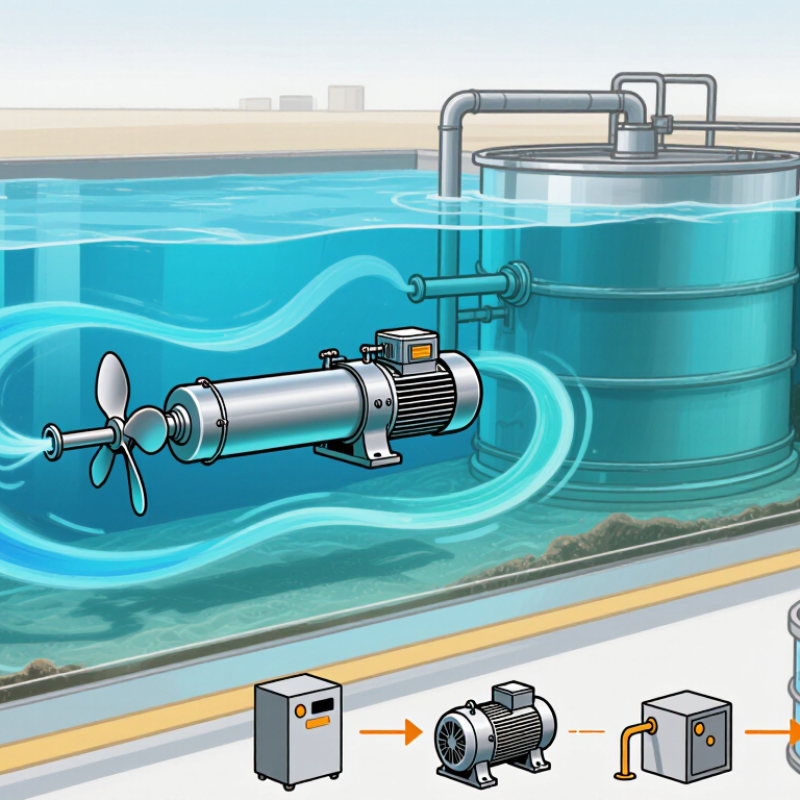
Start by naming the result you need: suspended solids, uniform blending, or fewer stagnant zones. These are different duties. A mixer that keeps light particles moving may struggle with dense sludge or a viscous liquid. Note the fluid’s solids content, temperature, and tendency to settle. Do not size equipment by motor power alone; required thrust and flow pattern matter too.
Measure the tank’s liquid depth, width, and operating level. Record the location of inlets, outlets, baffles, and internal pipework. These details can redirect flow or create quiet corners. The U.S. EPA’s 2013 Energy Efficiency in Water and Wastewater Facilities report estimates that water and wastewater utilities use roughly 3% of U.S. electricity. That figure is a useful reminder to assess operating conditions and energy needs together, not to assume one mixer size fits every tank. Small details matter.
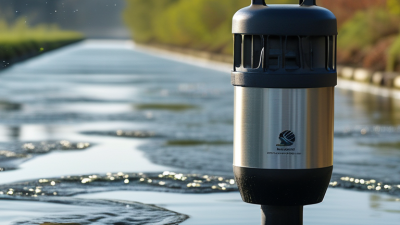
Tip: Match the impeller and thrust to the liquid, not just the tank volume. Thin wastewater and viscous sludge behave differently. Fibers can wrap around unsuitable blades, while heavy solids may settle unless circulation reaches the tank floor. Note the liquid’s viscosity, solids content, temperature, and any corrosive properties before comparing mixer designs. Small details matter.
Tip: Connect the mixer’s flow pattern to the process. A propeller-style unit can create broad circulation in many tanks, but baffles, corners, and unusual tank shapes may leave stagnant zones. For solids suspension, check whether the expected flow keeps material moving near the bottom. For shear-sensitive products, avoid assuming that stronger mixing is always better. Check the flow.
Tip: Consider operating conditions and installation limits together. Continuous duty, changing liquid levels, and frequent starts can affect the suitable motor and mounting arrangement. Confirm that the mixer can be positioned, inspected, and removed safely within the available access space. A specification can still miss real tank behavior. Request process data, review the proposed placement, and consider a controlled trial when uncertainty remains. It may take adjustment. That is worth planning for.
| Tip | Fluid or Process Requirement | Mixer Design to Consider | What to Check Before Selection |
|---|---|---|---|
| 1 | Low-viscosity liquids that need bulk circulation, blending, or solids suspension | Axial-flow propeller designed to move a large volume of liquid with relatively low shear | Confirm tank dimensions, liquid depth, required circulation pattern, and whether the mixer can be positioned to avoid short-circuiting flow. |
| 2 | Higher-viscosity fluids or processes that require stronger local shear | A higher-torque design or a mixer arrangement suited to the fluid’s viscosity and mixing duty | Provide viscosity at operating temperature and note whether it changes during the process. Ask for performance data at the actual operating conditions. |
| 3 | Suspended solids, such as sludge or settled material | A robust propeller and installation angle that directs flow toward the floor and reduces stagnant zones | Specify solids concentration, particle characteristics, settling tendency, tank-floor shape, and the minimum liquid level during operation. |
| 4 | Fibrous, stringy, or debris-laden liquids | A non-clogging propeller profile and a design with suitable clearances for the expected material | Describe the type and size of debris, potential for wrapping, and any upstream screening. Check access requirements for inspection and cleaning. |
| 5 | Corrosive, abrasive, or chemically variable liquids | Materials and sealing arrangements selected for the specific chemical and operating environment | Provide chemical composition, concentration, temperature, pH where relevant, and abrasive content. Verify compatibility for wetted parts, seals, and fasteners. |
| 6 | Intermittent operation, variable liquid levels, or changing process conditions | A mixer and mounting arrangement suitable for the full operating range; speed control may help where process demand varies | Check start frequency, duty cycle, minimum submergence, temperature rise, motor cooling requirements, and whether speed adjustment is appropriate. |
| 7 | Defined mixing targets, such as uniform blending or maintaining solids in suspension | A configuration selected from process data rather than motor power alone | State the tank shape and volume, target mixing time or suspension requirement, inlet and outlet locations, and available mounting points. Request a duty-point assessment. |
When choosing a submersible mixer, compare thrust, motor power, and energy use under the same operating conditions. Thrust, measured in newtons, indicates the force available to move liquid and suspended solids. A higher motor rating does not automatically mean stronger mixing. Ask for performance data at your tank’s depth, liquid level, and solids concentration.
Look beyond the nameplate. The International Energy Agency’s 2011 report, Energy-Efficiency Policy Opportunities for Electric Motor-Driven Systems, estimates that motor-driven systems use about 45% of global electricity. That figure covers many applications, not mixers alone, but it shows why operating cost matters. Estimate annual consumption by multiplying measured input power in kilowatts by operating hours. Then compare energy use alongside thrust, not instead of it. Small differences add up.
Check how the mixer performs near tank walls and corners, where dead zones can remain. Request the test conditions behind any thrust or efficiency figures; laboratory results may not match a real tank. I would also leave room for a site trial. It can reveal uneven circulation that a data sheet misses. Measure power draw during normal operation, and note whether the mixer needs frequent speed changes. Real conditions can be messy.
Choosing a submersible mixer starts with the liquid, not the catalogue. Check its temperature, pH, solids, and cleaning chemicals before selecting wetted materials. Stainless steel may suit many wastewater duties, but chlorides or abrasive grit can change the choice. NACE International’s IMPACT study estimated global corrosion costs at US$2.5 trillion annually, or 3.4% of global GDP, using 2013 data. That figure covers many industries, not mixers alone, but it shows why material compatibility deserves more than a quick checkbox.
Mounting affects both mixing performance and future work. A guide-rail arrangement can let crews raise a unit without entering a tank; a fixed bracket may be simpler where access is clear. Check lifting points, cable routing, tank geometry, and whether the mixer can be withdrawn past pipes or handrails. Small detail. A technically correct mixer can still be awkward to remove.
Plan maintenance access before installation. Leave room to inspect seals, connectors, and lifting hardware, and confirm that isolation and lifting procedures are practical. The U.S. EPA’s 2022 Clean Watersheds Needs Survey estimated US$630.1 billion in wastewater infrastructure needs over 20 years. This is a system-wide estimate, not a mixer-maintenance figure, but it underscores the value of durable, serviceable equipment. One trade-off is easy to miss: the most accessible mounting option may not provide the best flow pattern. Verify both against the tank layout, and revisit assumptions when operating conditions change.
Material Check: Typical Density of Common Mixer Materials
Typical densities are approximate and vary by alloy and grade. Density alone does not determine suitability: check chemical compatibility, corrosion resistance, and solids content. Also confirm that the mounting arrangement fits the tank and that the mixer can be safely removed for inspection and maintenance.
A submersible mixer should be easy to control from a safe, dry location. Check whether the panel shows motor status, alarms, and operating speed clearly. Simple controls help operators spot a problem before it becomes a shutdown. Small details matter. Confirm that emergency stops are easy to reach and that overload protection suits the motor and duty cycle. Ask how the mixer responds to a blocked impeller or unexpected power loss.
Safety features deserve a close look during a site review. Inspect cable entry points, lifting arrangements, and guards around moving parts. The mixer should be straightforward to isolate before cleaning or maintenance. Look for clear instructions, not just a list of technical specifications. I still find cable handling easy to underestimate; awkward lifting can make routine work less safe.
Supplier support matters after installation, too. Ask what troubleshooting guidance is available, how quickly common replacement parts can be supplied, and whether technicians can help with commissioning. Request maintenance instructions and confirm they match your operating conditions, such as tank depth and liquid consistency. A helpful supplier will ask questions about the application rather than recommend a unit immediately. If answers are vague, pause and verify the details before choosing.