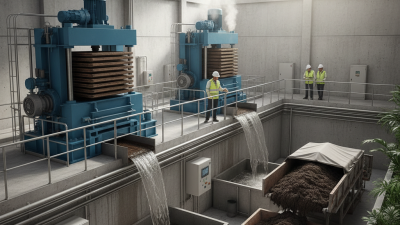
What is Sludge Dewatering Screw Press and How Does it Work?
Sludge Dewatering Screw Press is a key technology in wastewater management. This equipment effectively reduces the volume of sludge by extracting water, ensuring better disposal and reducing costs. According to a report by Global Market Insights, the sludge dewatering equipment market is projected to surpass $3 billion by 2026, reflecting the growing importance of efficient sludge management.
The Sludge Dewatering Screw Press operates through a simple yet efficient mechanism. It employs a screw and filter design to separate solids from liquids. This method is recognized for its durability and low maintenance. In contrast, traditional methods often lead to high operational costs and are less reliable. As industries push for sustainable practices, this technology has gained traction, yet some challenges remain, such as energy consumption and the need for more effective sludge conditioning.
While the benefits of Sludge Dewatering Screw Press are significant, not all installations achieve optimal performance. Issues like operator training and equipment calibration can hinder efficiency. Continuous research and development are crucial to address these shortcomings. As the demand for advanced wastewater treatment solutions rises, refining this technology will play a vital role in environmental sustainability.
What is a Sludge Dewatering Screw Press?
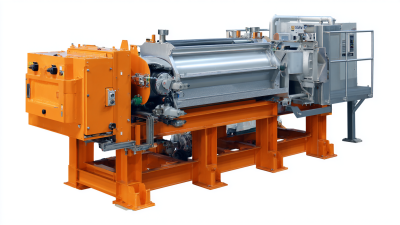
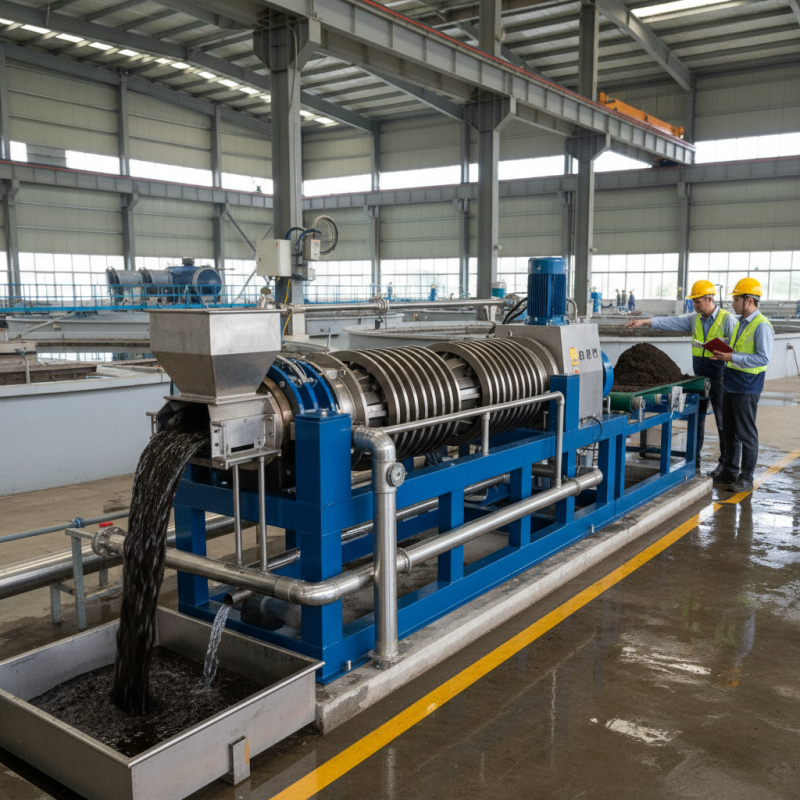
A sludge dewatering screw press is a vital piece of equipment in wastewater treatment facilities. It processes thick sludge by separating water from solid materials. The machine uses a screw mechanism to compress and expel excess water, thus reducing sludge volume significantly.
According to a report by the American Society of Civil Engineers, efficient dewatering can reduce sludge volume by up to 90%. This percentage highlights the significance of effective dewatering in municipal waste management.
The operational mechanism is relatively simple yet effective. Sludge is fed into the press, where the screw conveyor gradually moves it through a narrowing chamber. As the sludge moves, mechanical pressure increases, which compacts the solids. Studies indicate that proper operational parameters can enhance dewatering performance. Inefficiencies often arise from incorrect sludge feed rates or varying sludge characteristics. Finding the right balance is essential for optimal results.
Many plants face challenges in sludge dewatering. Seasonal variations and changing influent compositions can impact performance. While screw presses are generally reliable, they require periodic maintenance to prevent breakdowns. A failure can lead to increased operational costs and environmental compliance issues. Thus, ongoing monitoring and adjustments become necessary. Investing in staff training and technology can help mitigate these challenges, promoting a more efficient and sustainable operation.
Principle of Operation for Sludge Dewatering Screw Press
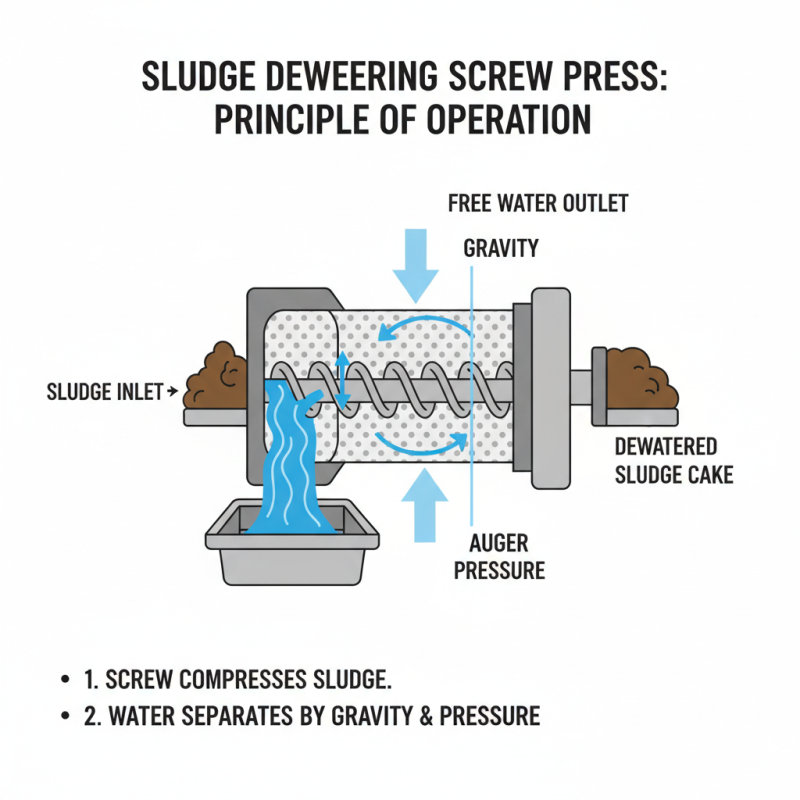
The principle of operation for a sludge dewatering screw press involves several key processes. Initially, sludge enters the machine through an inlet. The screw, which is housed within a perforated cylindrical screen, starts to rotate. This rotation compresses the sludge, driving out free water through the perforations. Crucially, the press applies both gravity and auger pressure to separate solids from liquids.
As water is expelled, the sludge thickens. Research indicates that a well-designed screw press can achieve solid concentrations of up to 30-35%. This is a significant improvement over traditional dewatering methods, such as centrifuges or belt presses, which may reach only 20-25% solid concentration. The efficiency of this process depends on various factors, including the type of sludge and the specific design features of the equipment.
However, operational challenges exist. For example, improper maintenance can lead to clogging in the system. This issue can hinder performance, resulting in increased operational costs. Additionally, the effectiveness of the sludge dewatering may decline if the feed sludge has high viscosity or varying particle sizes. Such inconsistencies can complicate the separation process, leading to less optimized outcomes.
Key Components of Sludge Dewatering Screw Press
Sludge dewatering screw presses play a vital role in water treatment facilities. These machines reduce the volume of sludge, making disposal easier. Key components include the inlet, dewatering section, and discharge. The inlet feeds the sludge into the system, where its consistency is critical. A study from the Water Environment Federation highlights that proper feed moisture content significantly impacts efficiency.
The dewatering section is where the magic happens. It consists of a rotating screw within a perforated cylinder. The design of this section allows for a continuous process. Studies indicate that screw presses can achieve solid content of up to 25% in dry weight, offering significant cost savings in waste management. The pressure and shear forces applied here separate water from solids, yet variations can yield differing efficiencies.
Lastly, the discharge unit ejects the treated material. This component influences the overall system performance. Variability in the output can signal potential operational challenges. Operators must regularly check for wear and tear. The maintenance of these key components is crucial for reliability. Understanding and optimizing these parts can enhance the effectiveness of the sludge dewatering process.
Advantages of Using Sludge Dewatering Screw Press
Sludge dewatering screw presses are essential in waste management. They transform wet sludge into a drier end product, significantly reducing disposal costs. The process involves pressing sludge between rotating screws and a screen, allowing water to escape while retaining solids. This method is energy-efficient and requires minimal maintenance.
One key advantage of using a sludge dewatering screw press is its ability to handle varying sludge types. It can effectively manage food waste, industrial byproducts, and municipal sewage. As a result, facilities can optimize their operations by using a single technology for different sludge sources.
**Tips:** Regular inspection of the equipment ensures it runs smoothly. Address any wear and tear promptly. Operators should also be trained to observe the sludge characteristics, adjusting parameters as needed for optimal performance. Remember, a well-maintained system leads to better efficiency and sludge quality.
The environmental impact is another significant benefit. Less sludge means reduced landfill use. This contributes to a more sustainable waste management practice. However, it’s crucial to be aware that not all systems work seamlessly in every scenario. Continuous assessment and adaptation are necessary to achieve the best results.
Sludge Dewatering Efficiency of Different Methods
This bar chart illustrates the efficiency of various sludge dewatering methods, showing the percentage of solid content achieved after dewatering. The data represents common methods such as Centrifugation, Belt Press, and Screw Press.
Applications of Sludge Dewatering Screw Press in Wastewater Treatment
Sludge dewatering screw presses play a crucial role in wastewater treatment. They significantly reduce the volume of sludge, which is a byproduct of the treatment process. According to a report from the Water Environment Federation, modern wastewater treatment facilities can produce 1.5 million tons of sludge annually in the U.S. alone. Efficient dewatering can reduce this volume by up to 90%. This translates into substantial savings in transportation and disposal costs.
The applications of sludge dewatering screw presses are extensive. They are used in municipal wastewater facilities, food processing plants, and industrial sites. Each application presents unique challenges. For instance, food processing plants can produce fibrous sludges that may clog traditional systems. In such cases, screw presses provide a reliable solution. The unique design of these presses allows for continuous operation and easy handling of varying sludge types. Reports suggest a dewatering efficiency of around 85% for typical municipal sludges.
However, not all sludge types are treated equally. Some viscous or thick sludges may require additional preprocessing to optimize dewatering efficiency. Furthermore, the energy consumption of the screw press systems is a consideration. Though they are efficient, energy costs can become significant over time. Balancing efficiency with operational costs is an ongoing area for improvement in this technology.

 +86 13600513715
 CONTACT NUMBER
 CONTACT NUMBER