2025 Guide to Inclined Tube Settler Benefits and Applications
In the quest for efficient separation and clarification processes in water treatment systems, the Inclined Tube Settler technology has emerged as a critical component in modern engineering applications. According to Dr. Emily Carter, a leading expert in wastewater management, "The Inclined Tube Settler offers unprecedented advantages in reducing footprint and enhancing settling efficiency." This innovative design incorporates a series of inclined tubes that allow for the rapid settling of particulates, greatly improving the overall performance of treatment facilities.
The benefits of utilizing Inclined Tube Settlers extend beyond mere space-saving advantages. They facilitate higher throughput rates while minimizing the use of chemicals, thereby promoting sustainable practices within the industry. Emerging applications across various sectors, such as municipal water treatment plants, industrial wastewater facilities, and stormwater management systems, demonstrate the versatility and effectiveness of this technology.
As we delve into the details of the Inclined Tube Settler, this guide will explore its benefits, operational principles, and diverse applications. By understanding the workings and advantages of Inclined Tube Settlers, stakeholders can make informed decisions to enhance their water treatment processes, ensuring a cleaner and more sustainable future.
Overview of Inclined Tube Settlers and Their Functionality
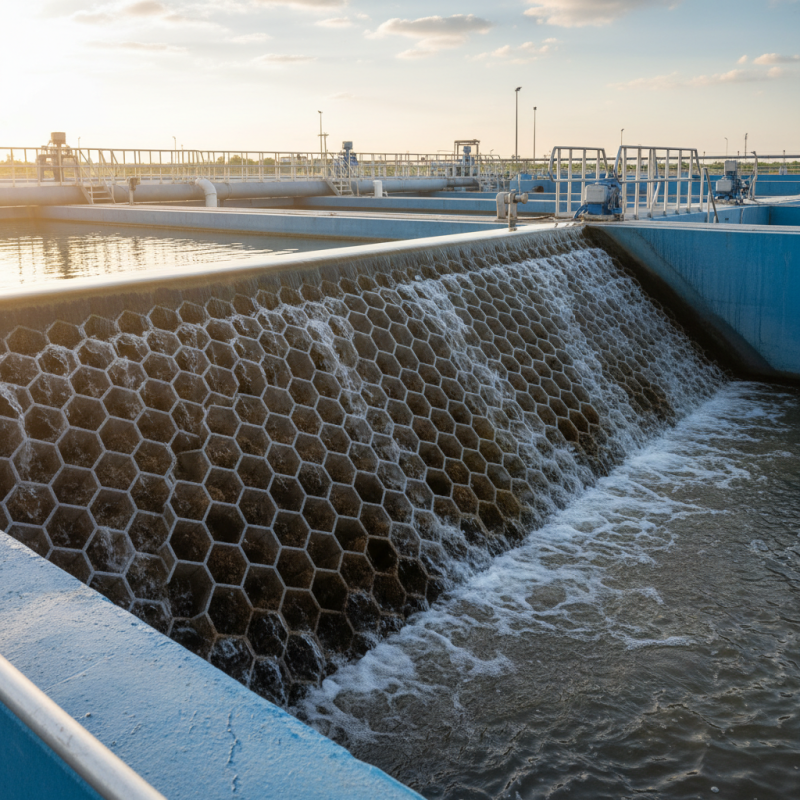
Inclined tube settlers are an essential component in modern water and wastewater treatment plants, renowned for their efficiency in promoting sedimentation. These structures consist of multiple inclined tubes that facilitate the separation of solids from liquids. The innovative design allows for a significantly reduced footprint compared to traditional clarifiers, making them a popular choice for facilities looking to optimize space. According to industry reports, the use of inclined tube settlers can improve settling rates by up to 30%, which is critical in high-density effluent treatment scenarios.
The functionality of inclined tube settlers is rooted in their geometry, which creates a larger surface area for sedimentation while minimizing the distance particles must travel to reach the bottom. This enhanced flow dynamics not only increases the efficiency of solids removal but also allows for higher throughput in treatment processes. Research highlights that these systems can achieve a particle removal efficiency of over 90%, making them ideal for treating various wastewater types, including municipal, industrial, and stormwater runoff. As regulations become more stringent, the adoption of inclined tube settlers is expected to grow, reflecting their capacity to address both environmental compliance and operational efficiency effectively.
Key Benefits of Using Inclined Tube Settlers in Water Treatment
Inclined tube settlers are becoming increasingly popular in water treatment processes due to their numerous advantages. These settlers leverage gravity to enhance the sedimentation process, allowing for efficient separation of particulates from water. By utilizing inclined surfaces, they maximize the settling area within a compact design, which makes them particularly effective in facilities where space is at a premium. This innovative design not only optimizes sedimentation rates but also reduces the required footprint of treatment systems.
One of the key benefits of inclined tube settlers is their ability to improve overall water quality through the enhanced removal of suspended solids. As water flows through the inclined tubes, particles settle more rapidly, leading to clearer effluent. This not only aids in meeting regulatory standards but also decreases the load on downstream filtration processes. Additionally, the design minimizes turbulence, which can further reduce re-suspension of settled particles, promoting a more consistent quality of treated water.
**Tips:** When considering the implementation of inclined tube settlers, ensure that the design aligns with the specific characteristics of the water being treated. It's also beneficial to conduct regular maintenance checks to ensure optimal performance and prevent any blockages that could hinder their efficiency. Finally, evaluate the scalability of the technology for future expansion as water treatment needs evolve.
Applications of Inclined Tube Settlers in Various Industries
Inclined tube settlers are instrumental in various industries due to their efficiency in sedimentation processes. In the water and wastewater treatment sector, these settlers enhance the clarification process by using gravity to expedite the settling of suspended solids. The inclined design allows for a smaller footprint while increasing the settling surface area, making it an ideal choice for municipal and industrial wastewater treatment facilities striving for high throughput without extensive infrastructure.
Moreover, inclined tube settlers also find significant applications in the food and beverage industry. They can be effectively utilized for the clarification of fruit juices, beverages, and other liquid products, ensuring that impurities and solids are efficiently removed. This not only improves product quality but also extends shelf life, aligning with industry standards for cleanliness and safety. Additionally, in the mining and mineral processing sectors, these settlers play a crucial role in the separation of valuable minerals from tailings, helping to optimize resource extraction while minimizing environmental impact. The adaptability of inclined tube settlers across these diverse industries highlights their essential role in enhancing operational efficiency and sustainability.
Comparative Analysis: Inclined Tube Settlers vs. Traditional Settling Methods
Inclined tube settlers, designed to enhance the sedimentation process, have emerged as an efficient alternative to traditional settling methods. By utilizing inclined surfaces, these settlers increase the effective settling area while minimizing the footprint required in treatment facilities. Studies indicate that inclined tube settlers can achieve up to 90% removal efficiency for suspended solids in wastewater treatment, significantly outperforming conventional large sedimentation tanks, which typically offer efficiencies around 30-70%. This enhanced performance is particularly advantageous in space-limited environments where maximizing the capacity of existing infrastructure is critical.
The comparative analysis highlights not only efficiency but also the operational benefits of inclined tube settlers over traditional methods. For instance, inclined tube settlers generally allow for quicker settling due to the reduced hydraulic depth, which leads to shorter retention times and subsequently lower operational costs. Additionally, according to industry reports, the maintenance requirements for inclined tube settlers are considerably lower, due to their simpler structure and lower accumulation of sediments compared to traditional basins. The expected lifetime of these systems often exceeds 20 years with minimal upkeep, contributing to reduced total cost of ownership—an essential metric for facilities looking to optimize their long-term operational budgets.
2025 Guide to Inclined Tube Settler Benefits and Applications
This chart compares the efficiency of Inclined Tube Settlers with Traditional Settling Methods based on different parameters: sedimentation rate, required footprint, maintenance frequency, and cost-effectiveness. The values are indicative of their performance in typical applications.
Future Trends and Innovations in Inclined Tube Settler Technology
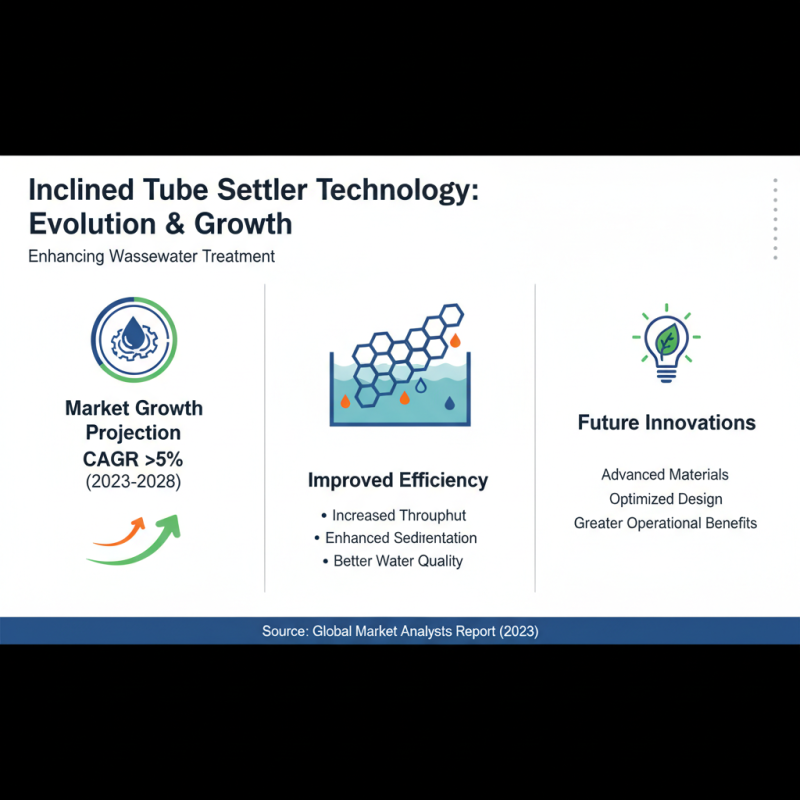
The inclined tube settler technology has been evolving steadily, driven by the increasing demand for efficient wastewater treatment solutions. According to a report by global market analysts, the inclined tube settlers are projected to experience significant growth, with the market expected to expand at a CAGR of over 5% between 2023 and 2028. This growth is primarily attributed to their ability to enhance the sedimentation process, allowing for greater throughput and improved water quality. Innovations in materials and design are expected to further increase the settler's efficiency, providing even greater operational benefits.
Future trends indicate a shift towards more automation and integration with advanced monitoring systems. The application of IoT technology in inclined tube settlers may enable real-time data collection and analysis, helping operators to optimize performance and maintain regulatory compliance more effectively. Furthermore, research is underway to explore the adaptation of inclined tube settlers in areas beyond traditional wastewater treatment, such as stormwater management and industrial applications. These innovations indicate a promising future for inclined tube settler technology, aiming to meet both environmental standards and the growing needs of diverse sectors.

 +86 13600513715
 CONTACT NUMBER
 CONTACT NUMBER