Why Choose Lamella Plate Settler for Efficient Water Treatment?
The need for efficient water treatment has never been more critical. Increasing water scarcity and pollution demand innovative solutions. The Lamella Plate Settler emerges as a promising technology to address these challenges. According to industry reports, this system can enhance sedimentation efficiency by up to 90%. Such improvement significantly reduces land use and operational costs.
The Lamella Plate Settler separates solids from liquids effectively. With its compact design, it requires less space compared to traditional settling tanks. Recent studies indicate that it reduces energy consumption by optimizing flow patterns. However, it is crucial to consider installation and maintenance challenges that may arise. Operators must ensure regular cleaning to maintain optimal performance.
Water treatment facilities using Lamella technology report faster processing times. This efficiency translates into better service delivery. Yet, the choice is not flawless. Many facilities struggle with finding skilled technicians for upkeep. Understanding both the benefits and challenges helps ensure the successful implementation of Lamella Plate Settler systems.
Advantages of Lamella Plate Settlers in Water Treatment Applications
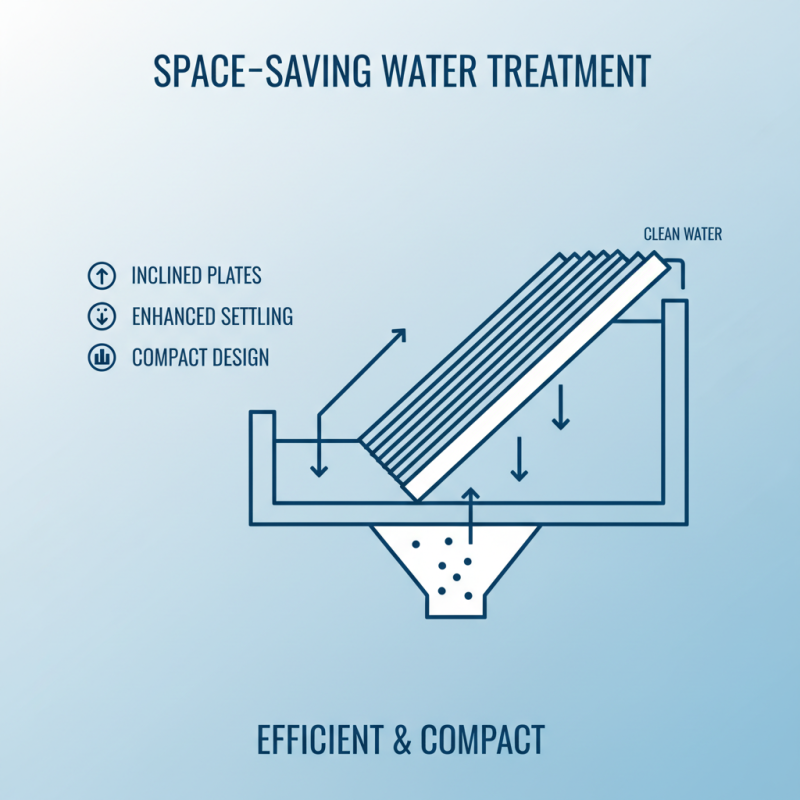
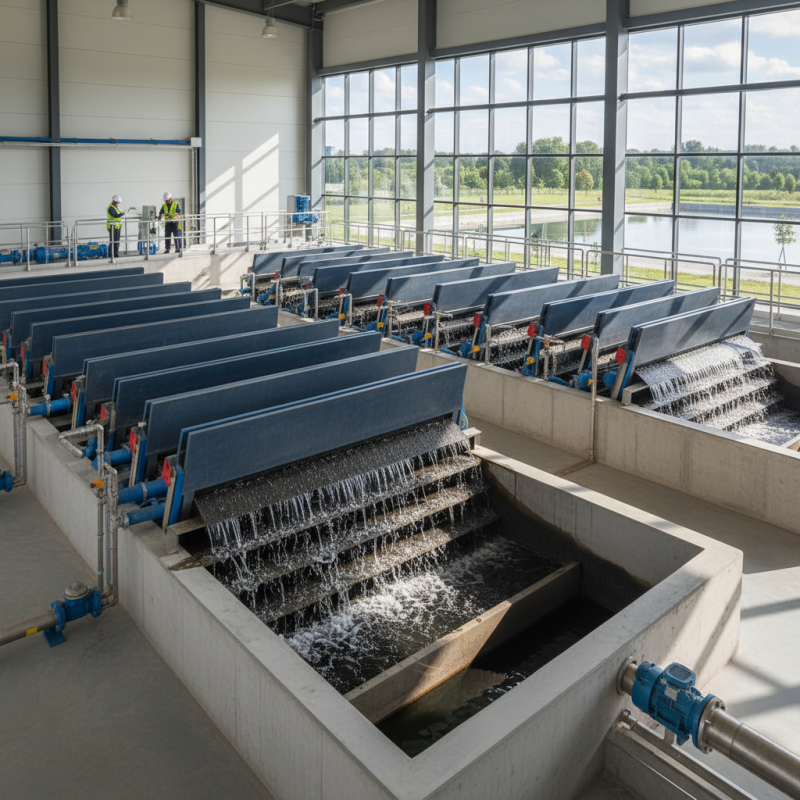
Lamella plate settlers have gained popularity in water treatment due to their efficiency. They consist of inclined plates that facilitate the sedimentation process. This design increases the effective settling area without requiring a large footprint. Compact systems like these help save valuable space in treatment facilities.
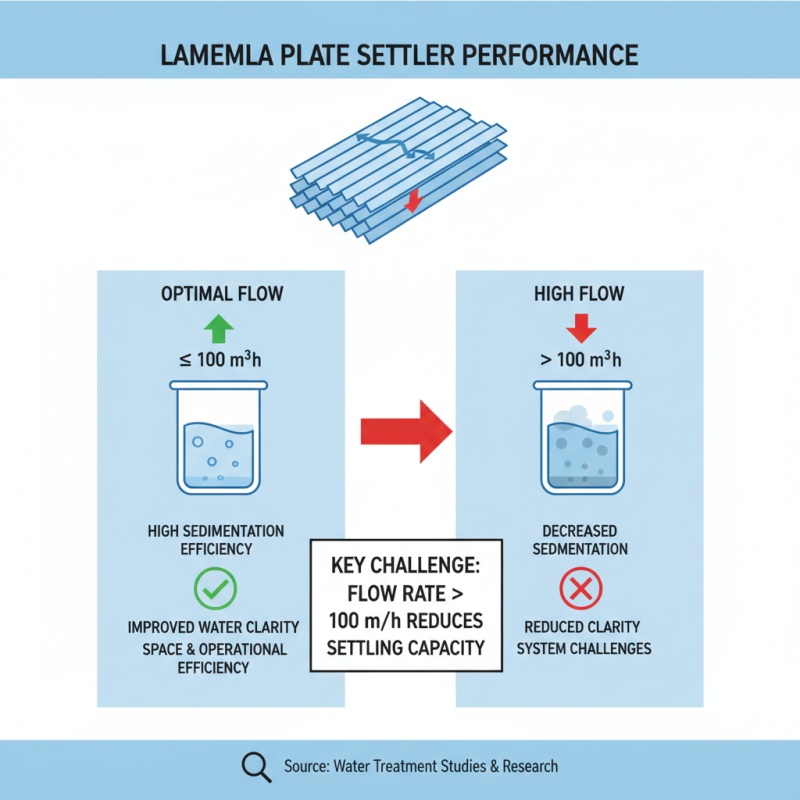
The advantages of lamella plate settlers are significant. They can handle high flow rates, making them ideal for industrial applications. Their ability to remove solids from water enhances overall purification. This process not only improves water clarity but also reduces chemical usage. Lower chemical demands can lead to cost savings and environmental benefits.
However, it’s essential to consider their limitations. The design may not be suitable for all types of wastewater. Some complex waste streams could require pretreatment. Operators must carefully monitor performance to ensure optimal functioning. Regular maintenance is crucial, as sediment buildup affects efficiency. Recognizing these challenges can help optimize water treatment processes.
Efficiency of Lamella Plate Settlers Compared to Traditional Settling Methods
Lamella plate settlers offer significant advantages over traditional settling methods. The design promotes enhanced sedimentation rates. The plates create a large surface area for particles to settle effectively. This can lead to quicker clarification of water, saving time in treatment processes. In some cases, traditional systems might struggle to achieve the same efficiency.
Moreover, lamella settlers occupy less space. This is especially crucial in areas with limited room for infrastructure. They can also handle varying flow rates, which is beneficial for fluctuating water supplies. However, there are aspects to consider. Installation can be complex, requiring careful planning and expertise. Improper setup may lead to inefficiencies, counteracting their potential benefits.
Regular maintenance is vital for optimal performance. Neglecting this can cause blockages and reduce settling efficiency. Some operators may underestimate the importance of routine checks. While these settlers show promise, they are not a one-size-fits-all solution. Adapting to specific treatment needs remains essential. Overall, lamella plate settlers represent an efficient choice but require thoughtful implementation and management.
Cost-Effectiveness and Maintenance of Lamella Plate Settlers in Industry
Lamella plate settlers are gaining ground in water treatment due to their cost-effectiveness and low maintenance requirements. They have been shown to reduce space requirements by up to 90%. This efficiency is crucial for industries facing land constraints. Reports suggest that operational costs for lamella systems can be reduced by as much as 30% compared to traditional settling tanks.
However, there are challenges. While lamella settlers require less land, the initial investment might be higher. Maintenance is more straightforward, involving routine checks and occasional cleaning. Yet, some operators report underestimating the frequency of maintenance needed for optimal performance. Regular upkeep is critical to avoid issues with sludge buildup.
In terms of performance, lamella settlers can achieve sedimentation rates of 1 to 2 m/h. This speed is significant compared to conventional systems, which operate at a fraction of that rate. However, not all facilities may experience these results. Factors such as influent characteristics and operational practices can influence efficiency. Awareness of these variables is essential for achieving desired outcomes.
Why Choose Lamella Plate Settler for Efficient Water Treatment?
| Feature |
Lamella Plate Settler |
Traditional Settler |
| Space Efficiency |
High |
Moderate |
| Clarification Rate |
Excellent |
Good |
| Maintenance Cost |
Low |
High |
| Installation Complexity |
Easy |
Complex |
| Sedimentation Efficiency |
Very High |
Moderate |
| Operational Efficiency |
Optimized |
Standard |
Case Studies Demonstrating Success of Lamella Plate Settlers in Wastewater Management
In recent years, lamella plate settlers have gained recognition in wastewater management. Case studies show their effectiveness in various municipal and industrial applications. One report indicates that these settlers can enhance sedimentation efficiency by up to 90%. This is significant compared to traditional methods, where efficiency often hovers around 60%.
Taking a closer look at a wastewater treatment facility in Europe, they reported a substantial decrease in their treatment footprint. The lamella plate settler allowed them to reduce tank volume by 50%. This was achieved while maintaining high-quality effluent. Operators noted that fewer manpower resources were needed, which led to lower operational costs. However, the initial installation cost remains a hurdle for some municipalities.
Another case study from Asia highlights the impact of lamella plate settlers in removing suspended solids. The facility recorded a 70% reduction in turbidity levels after implementation. Yet, they faced challenges in adapting existing infrastructure to support the new technology. Flexibility and planning are crucial for successful integration. Overall, these case studies reflect the potential of lamella plate settlers, while also emphasizing the need for careful evaluation before adoption.
Efficiency of Lamella Plate Settlers in Wastewater Management

 +86 13600513715
 CONTACT NUMBER
 CONTACT NUMBER