+86 13600513715


Choosing a Biofilter For Water Treatment in 2026 means looking beyond product claims. The right system depends on the water, the target contaminants, available space, and the operator’s capacity to maintain it. A compact unit may suit a small facility, while a municipal plant may need robust media beds, flow controls, and routine backwashing. The details matter.
Environmental biotechnology expert Bruce Rittmann has advanced the principle that treatment depends on matching biological processes to operating conditions. In paraphrase: “A biofilter performs best when its biology fits the water it receives.” That is a useful lens, not a substitute for pilot testing or site-specific engineering. Feed-water temperature, dissolved oxygen, hydraulic loading, and media condition can all affect performance. Even a well-designed filter can disappoint when these factors are overlooked.
This guide compares seven biofilter options for 2026, including biological activated carbon, trickling filters, and moving-bed systems. It considers treatment goals, typical strengths, maintenance demands, and practical limitations. Look for clear performance data, realistic operating requirements, and a plan for monitoring headloss and water quality. A glossy specification sheet is not enough. Some choices will involve trade-offs, and the best fit may be less obvious than the most advanced-looking equipment. Use the comparisons as a starting point, then verify that each option suits your water and operating conditions.
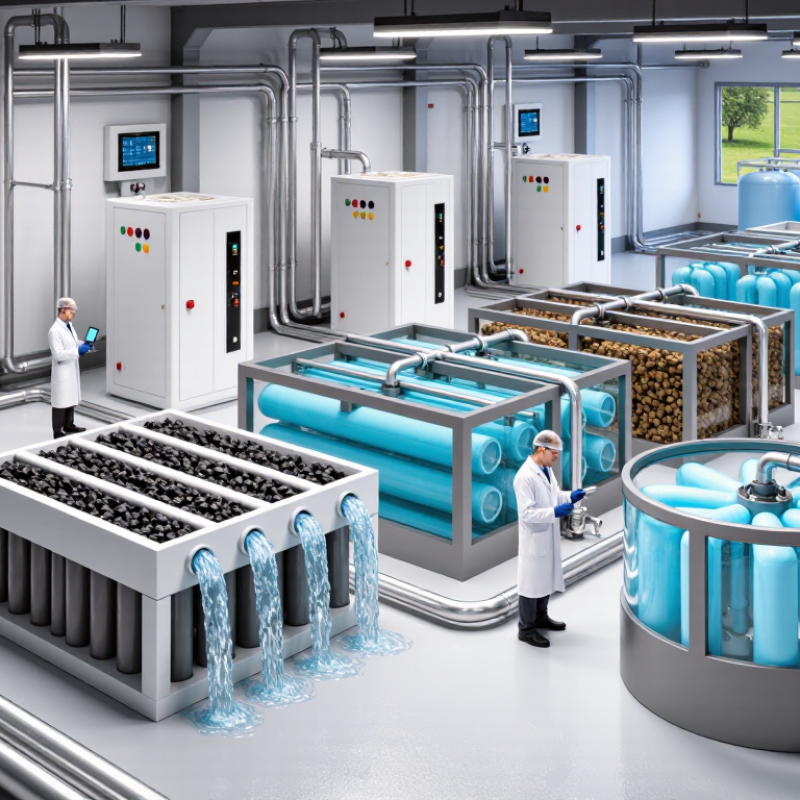
A biofilter gives microorganisms a surface to live on as water passes through it. The surface may be textured plastic, sand, or another porous medium. Water carries dissolved organic matter and ammonia across the biofilm, a thin, slippery layer of microbes and extracellular material. Not magic. Microbes use organic compounds as food, while other organisms help break them into simpler substances. A mature film can look brown or tan, but color alone does not show whether it is working well.
Ammonia removal depends on nitrifying bacteria, oxygen, and suitable water conditions. These bacteria convert ammonia into nitrite, then nitrate. The process needs time, and it can slow when oxygen, temperature, or alkalinity falls outside a useful range. Startup is rarely instant. Operators often track ammonia, nitrite, dissolved oxygen, and flow rather than judging performance by appearance.
Biofilms can also help retain fine particles. Sticky material and the filter bed catch some suspended solids, but this can clog passages and reduce oxygen delivery. Cleaning may be needed, though aggressive washing can remove too much biological growth. There is a trade-off. A clear-looking outlet does not prove every contaminant has been removed, and readings can vary with changing loads. The system deserves regular checks, not guesswork.
7 Best Biofilters for Water Treatment in 2026
Slow sand filters pass water gently through fine sand and a biologically active surface layer. They can reduce particles and some pathogens, but need space and careful cleaning. Rapid sand filters handle higher flow rates. They usually rely on upstream treatment and regular backwashing, so they are not interchangeable with slow sand beds.
Granular activated carbon (GAC) adsorbs many taste- and odor-causing compounds. When a biofilm develops on the carbon, the filter is called biologically activated carbon (BAC); microbes can then help break down biodegradable organics. Performance depends on water quality, contact time, and biofilm health. Carbon replacement or regeneration still matters. Easy to overlook. Trickling filters distribute wastewater over media, where air and attached microbes support treatment. Uneven flow can leave dry patches.
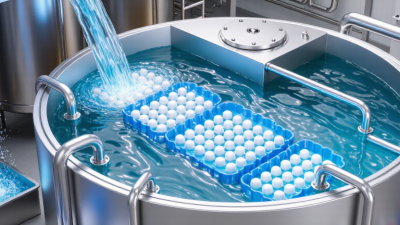
Submerged biofilters keep media underwater, with aeration supplying oxygen where needed. Moving bed biofilm reactors (MBBR) use free-moving carriers that provide surfaces for microbial growth. They can fit substantial treatment capacity into compact tanks, but carrier movement, aeration, and screening require attention. Small details matter. No single type suits every site: temperature, suspended solids, target contaminants, available space, and operator skills all affect selection. A pilot test may reveal limitations that design calculations miss. That uncertainty is worth taking seriously.
Seven biofilter types compared by their typical reliance on attached-growth biofilms.
How to read this: Scores are qualitative mechanism ratings, not measured removal efficiencies: 0 = biofilm is not a typical core mechanism; 4 = biofilm is central to treatment. Slow sand filters develop a biologically active surface layer; rapid sand filtration is typically physical, although biological activity can occur. BAC, trickling, submerged, and MBBR systems commonly rely on biofilms. GAC’s biological role varies with operating conditions.
A biofilter can clarify water, but its outlet turbidity is a design test, not a cosmetic measure. The World Health Organization’s Guidelines for Drinking-water Quality (2022) recommend turbidity below 1 NTU before disinfection where practicable. Particles can shield microorganisms from disinfectants. That matters.
For a tighter operational benchmark, the US EPA’s Long Term 1 Enhanced Surface Water Treatment Rule sets a limit of 0.3 NTU for at least 95% of monthly measurements from conventional or direct filtration, with no measurement above 1 NTU. This is a US regulatory requirement, not a universal standard. Still, it shows why a biofilter designed only to meet the WHO threshold may leave little room for process swings.
In practice, track turbidity after the filter, especially during start-up and after backwashing. A clear sample taken during steady flow can hide a brief spike when the bed ripens or trapped solids break through. Record the reading alongside flow rate and backwash timing. One awkward point: turbidity alone cannot confirm pathogen safety. Pair it with validated disinfection controls and routine microbial monitoring. A sensor also needs regular cleaning; a coated probe can report reassuring numbers that the water has not earned.
A biofilter should be judged by more than clear-looking water. Track empty bed contact time (EBCT), head loss, dissolved organic carbon (DOC), ammonia, and biofilm activity together. Drinking-water design references describe EBCTs around 5–20 minutes, but the useful value depends on temperature, media, and influent quality (Crittenden et al., MWH’s Water Treatment: Principles and Design, 2012). Record flow and water temperature beside every sample. A cold morning can change the story.
Watch head loss across the bed, not just at the outlet. A rising trend may signal solids buildup or uneven flow; backwashing can restore capacity, but overly aggressive washing may strip active biomass. Compare influent and effluent DOC to calculate removal, and measure ammonia to check nitrification. Rittmann and Huck’s Journal AWWA review (1989) describes biological filtration as a treatment process whose performance depends on maintaining active biofilms. Use ATP or another consistent activity test alongside water-quality results. Numbers need context.
Set site-specific alert limits using pilot results and seasonal records, rather than treating one EBCT or removal percentage as universal. One imperfect detail: biofilm tests can vary with sampling and handling. Keep the method consistent, note deviations, and investigate when DOC, ammonia, or head loss shifts together.
The comparison below covers seven established biofilter configurations. Removal figures are indicative screening ranges, not guaranteed results; actual performance depends on water quality, temperature, oxygen supply, media, loading, and acclimation.
| Biofilter configuration | Typical contact time | Head loss / hydraulic resistance | Indicative DOC removal | Ammonia removal potential | Biofilm activity to monitor | Best-fit application |
|---|---|---|---|---|---|---|
| Biological activated carbon (BAC) | EBCT: approximately 10–30 min | Increasing head loss as particles and biomass accumulate; track bed differential pressure and backwash trigger. | About 10–30% under suitable conditions; depends strongly on biodegradable DOC and upstream treatment. | Variable; nitrification may develop when the bed has sufficient oxygen, temperature, and acclimation. | Trend ammonia uptake or nitrification rate; pair with ATP or respiration testing and effluent DOC. | Drinking-water polishing, biodegradable organic matter control, and taste-and-odor treatment. |
| Rapid gravity sand biofilter | EBCT: commonly about 5–15 min | Monitor differential head through the filter cycle; rising head loss can indicate solids or biomass accumulation. | Often modest, roughly 5–20%; removal varies with source-water DOC and pretreatment. | Can be substantial in an acclimated filter, but performance varies with temperature, oxygen, and filter operation. | Track ammonia and nitrite across the bed; use respiration or biomass assays when troubleshooting. | Drinking-water filtration, especially where biological oxidation is part of the treatment train. |
| Biological aerated filter (BAF) | EBCT: commonly about 15–60 min, depending on treatment objective | Packed-bed head loss is operationally important; monitor differential pressure and backwash frequency. | Approximately 10–40% in suitable applications; carbon removal depends on biodegradable fraction and loading. | Often high after acclimation; stable results require adequate oxygen, alkalinity, and temperature. | Measure ammonia oxidation rate, dissolved oxygen, and nitrite; trend biomass activity against operating load. | Compact attached-growth treatment for carbon oxidation and/or nitrification. |
| Moving-bed biofilm reactor (MBBR) | Reactor HRT is commonly on the order of 1–6 h; EBCT is generally not the primary sizing measure. | Not a fixed packed bed; track screen losses, mixing, aeration, and carrier retention rather than bed head loss. | Roughly 10–50%, depending on influent biodegradability, carrier fill, and process configuration. | Can be high in a well-aerated, acclimated nitrifying stage; verify against ammonia loading and temperature. | Monitor ammonia removal rate, dissolved oxygen, carrier biofilm condition, and suspended solids. | Wastewater treatment and retrofit capacity expansion where attached-growth biomass is useful. |
| Trickling filter | EBCT is not usually standardized; design is commonly based on hydraulic and organic loading. | Usually assessed through distributor performance, media drainage, ponding, and airflow rather than a packed-bed head-loss target. | Broadly about 10–40% when biodegradable organic matter is available; site-specific. | Can support partial to high nitrification at appropriate loading and operating conditions. | Trend ammonia and nitrite removal, wetting distribution, airflow, and biofilm sloughing. | Attached-growth wastewater treatment, including carbon removal and, in suitable designs, nitrification. |
| Fluidized-bed biofilm reactor | EBCT is system-specific; evaluate contact time alongside media expansion and loading rate. | Controlled by upflow velocity and bed expansion; monitor pressure, expansion height, and media carryover. | Highly process-dependent; assess with site-specific influent and effluent DOC testing. | Can achieve strong nitrification when oxygen transfer, media surface area, and loading are adequate. | Measure ammonia uptake or nitrification rate; also track bed expansion and biofilm growth on media. | High-rate attached-growth processes where compact footprint and controlled media movement are desired. |
| Slow sand filter | EBCT is typically measured in hours; filtration rates are much lower than rapid sand filtration. | Head loss rises gradually as the surface layer accumulates solids and biological material; track over the filter run. | Often modest for total DOC, roughly 5–20%; biodegradable fractions may be reduced more than total DOC. | Usually variable and not the primary design objective; verify with influent and effluent ammonia measurements. | Assess biological-layer condition and trend DOC, ammonia, and microbial indicators through the filter cycle. | Low-rate filtration where land and filter-run time are available and source-water conditions are suitable. |
How to use the comparison: EBCT means empty-bed contact time; HRT means hydraulic retention time; DOC means dissolved organic carbon. Head loss is not directly comparable between fixed beds, moving-carrier reactors, and fluidized systems. Confirm design values through pilot testing or site operating data, and report ammonia removal with influent concentration, temperature, and loading.
Choosing among biological activated carbon, fixed-bed, moving-bed, and trickling filters starts with the treatment goal. The WHO/UNICEF Joint Monitoring Programme estimated that 2.2 billion people lacked safely managed drinking water in 2022. The figure underscores how varied source-water conditions can be; it does not prescribe a filter design. Measure influent organic carbon, ammonia, temperature, turbidity, and seasonal swings before shortlisting systems.
Operational fit matters just as much. The UN World Water Development Report 2024 estimates agriculture accounts for about 70% of global freshwater withdrawals, making water availability and reuse pressures important planning context. For each candidate, check contact time, oxygen supply, backwash needs, head loss, media life, and operator workload. Small details count. A cold-water plant, for example, may need longer biological contact time than a warm pilot test suggests. Verify effluent targets against the applicable water-quality standards, then pilot under realistic conditions. A neat pilot result can still mislead.
Ask vendors for performance data across changing flows, not only peak removal figures. Track startup time and by-products, too. Biofilters can reduce biodegradable organics, but they are not universal barriers for every contaminant. The best choice is the one that meets the treatment objective reliably, fits the site’s maintenance capacity, and remains stable when water quality shifts.