Top 10 Benefits of Using a Submersible Mixer?
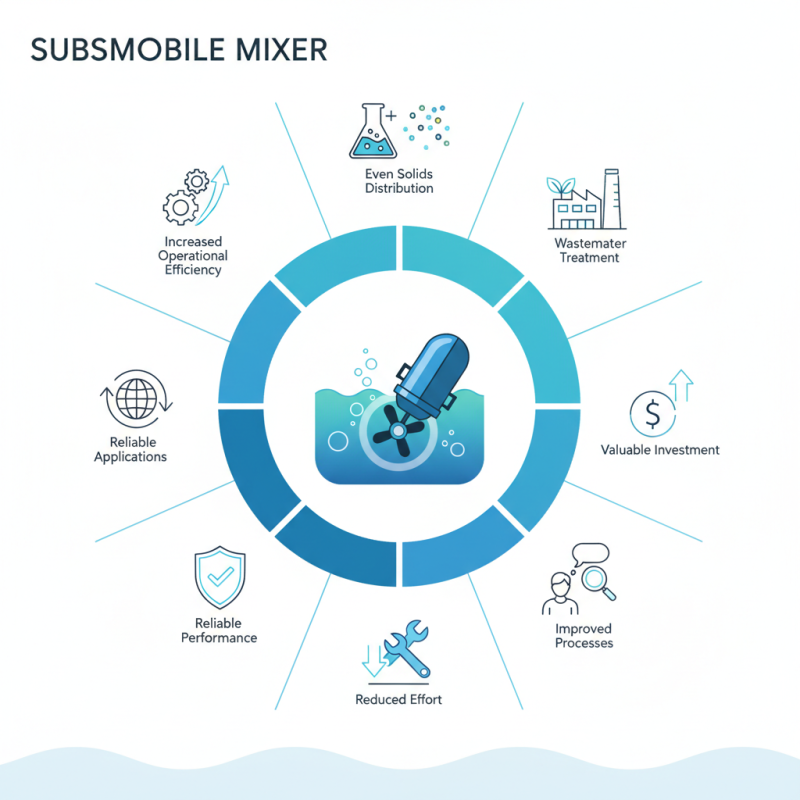
A Submersible Mixer is an essential tool in various industries. Its design allows for efficient mixing while submerged in liquids. This unique capability enhances productivity in applications like wastewater treatment and biogas production.
The advantages of using a Submersible Mixer are numerous. It ensures even distribution of solids and promotes optimal chemical reactions. Many companies have noticed significant improvements in their processes. However, not every system is perfect. Some users report challenges in maintenance. Others suggest that energy consumption could be a concern.
Despite these issues, the benefits often outweigh the drawbacks. A Submersible Mixer can greatly increase operational efficiency. Industries can achieve better results with less effort. This tool stands out as a valuable investment. Each organization should weigh its options carefully.
Benefits of Enhanced Mixing Efficiency in Various Applications
Submersible mixers enhance mixing efficiency in various applications. They work effectively in tanks and basins. The unique design allows them to stir liquids thoroughly. This becomes crucial in sectors like wastewater treatment and chemical processing. Improved mixing aids in uniform distribution of solids and liquids. Even small particles get suspended, preventing settling.
In agricultural applications, submersible mixers are equally beneficial. They mix fertilizers and nutrients consistently, optimizing crop yield. However, they may require regular maintenance. Fungus and sludge buildup can occur over time. Operators should monitor and clean them regularly. Otherwise, efficiency can drop, leading to uneven mixtures. These issues remind us that technology, while advanced, needs human oversight. Emphasizing efficiency without neglecting maintenance can ensure long-term benefits.
Improved Homogeneity and Consistency of Mixtures
Submersible mixers play a crucial role in achieving improved homogeneity and consistency of mixtures. They efficiently blend liquids, solids, and slurries within a single tank. This results in a uniform mixture that is essential for many industrial applications. The design allows for better penetration into dense materials, which traditional mixers may struggle with.
One notable benefit is the reduction of settling within the mixture. With constant motion, components remain suspended and well-distributed. However, achieving the perfect mixture may require adjustments in speed or duration. Not all applications yield the same results. Sometimes, the mixer might not reach every corner of the tank. Proper positioning is vital for optimal performance.
Another aspect to consider is energy efficiency. While submersible mixers are designed to blend effectively, they can consume more energy than expected. Over time, operators may need to assess whether the energy cost aligns with the desired consistency. It's always beneficial to monitor the actual performance against expectations. This attention to detail can help ensure that the mixture remains at the desired quality level throughout the process.
Top 10 Benefits of Using a Submersible Mixer
| Benefit |
Description |
Application |
| Improved Homogeneity |
Ensures uniform mixing of materials for better quality. |
Wastewater treatment, chemical blending |
| Increased Consistency |
Delivers consistent performance across batches. |
Food processing, pharmaceuticals |
| Energy Efficiency |
Lower energy consumption compared to traditional mixers. |
Bioenergy production, aquatic systems |
| Space Saving |
Compact design allows for installations in limited spaces. |
Tank mixing, small-scale operations |
| Versatility |
Suitable for various fluid types and viscosities. |
Water treatment, slurry mixing |
| Reduced Operational Costs |
Lower maintenance and operational expenses. |
Industrial processing, agriculture |
| Enhanced Mixing Speed |
Faster mixing results improve production cycles. |
Chemical reactions, fermentation |
| Lower Noise Levels |
Operates quietly, reducing noise pollution. |
Residential applications, sensitive environments |
| Ease of Installation |
Simple to install and integrate into existing systems. |
Construction, maintenance projects |
| Durability |
Built to withstand harsh environments and conditions. |
Mining, chemical processing |
Reduced Energy Consumption Compared to Traditional Mixers
Submersible mixers have gained traction in various industries due to their energy efficiency. Traditional mixers often consume excessive energy, resulting in high operational costs. According to a recent industry report, submersible mixers can reduce energy consumption by up to 40% compared to their traditional counterparts. This significant reduction not only lowers electricity bills but also contributes to a greener environment.
Additionally, submersible mixers operate at optimal levels in both large and small applications. They are designed to function effectively even in challenging conditions. The technology implements efficient motor designs, allowing for precise mixing with less energy use. It’s essential to note, however, that not all setups yield the same results. Factors like water chemistry and viscosity can affect performance. Some facilities may find that achieving maximum efficiency requires fine-tuning and adjustments, which can be time-consuming.
Furthermore, the lower energy consumption of submersible mixers often goes hand in hand with maintenance cost savings. By minimizing wear and tear, operators can extend the lifespan of their equipment. Yet, it’s worth recognizing that installation and training are critical steps that shouldn't be overlooked. Without proper setup, the promised energy savings may not reach their full potential, leading to frustration and unexpected expenses.
Versatility in Fluid Types and Applications for Industrial Use
Submersible mixers are incredibly versatile tools in various industrial applications. They can efficiently handle multiple fluid types, from thick sludge to thin liquids. This adaptability makes them invaluable in wastewater treatment facilities, chemical processing, and food production. Users often find them effective for both mixing and aeration tasks. However, this versatility can sometimes lead to overestimations of their capabilities.
For instance, while these mixers can process different fluids, they may struggle with highly viscous materials. Operators often need to make adjustments. They might overlook the need for specialized mixers for certain applications. Understanding fluid dynamics is crucial. The right choice can significantly improve efficiency, reducing energy consumption and operational costs.
In industries like pharmaceuticals, proper mixing is critical. Submersible mixers must meet strict hygiene standards. Failure to maintain cleanliness can lead to contamination. Regular maintenance and monitoring are essential. Some users may underestimate the importance of these practices. Adapting to various fluid types requires skilled operators. Proper training can bridge this gap and ensure optimal performance.
Ease of Maintenance and Long-Term Reliability of Equipment
Submersible mixers are essential in various industries, providing effective mixing solutions. When focusing on ease of maintenance, these mixers shine. Their design allows for easy access to parts, reducing downtime. Workers can quickly address issues, which keeps operations smooth. Maintenance is simple, thanks to fewer moving parts that can wear out.
Tips: Regular inspections can prevent major breakdowns. Schedule routine checks on seals and motors. This proactive approach minimizes unexpected failures. Also, maintain a log of maintenance activities. This helps you track the performance trends over time.
Long-term reliability is another significant advantage. A robust design ensures that submersible mixers can withstand harsh environments. They resist corrosion and debris buildup, which enhances their lifespan. However, neglecting maintenance can lead to issues. It's essential to balance reliability with consistent care to ensure optimal performance. Regular upkeep guarantees that your investment pays off in the long run.

 +86 13600513715
 CONTACT NUMBER
 CONTACT NUMBER